Epidemiology
- The most common autosomal recessive ataxia
- Peak incidence: 8–15 years (most cases < 25 years)
Etiology
- Autosomal recessive disorder caused by GAA trinucleotide repeat expansion in the FXN gene (chromosome 9)
- Leads to ↓ frataxin (an iron-binding protein) → impaired mitochondrial iron metabolism
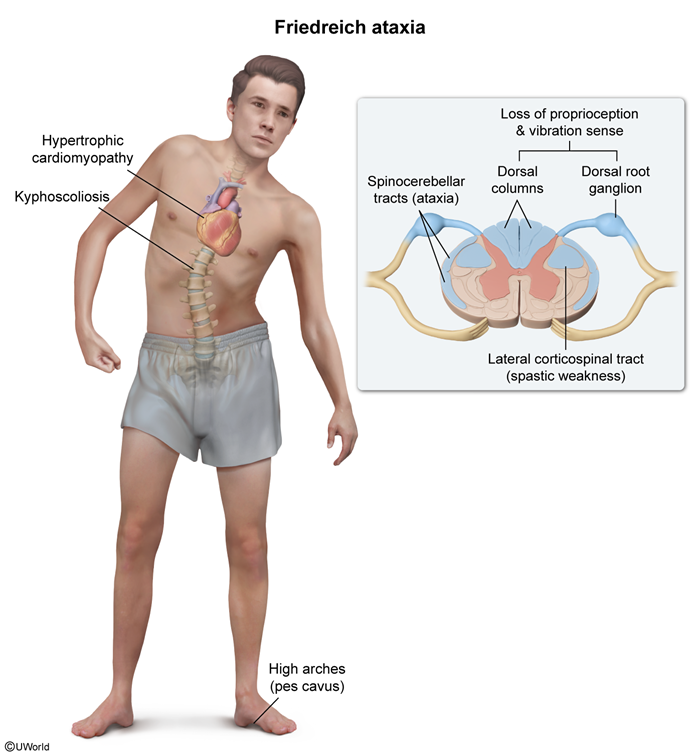
- Results in degeneration of dorsal columns, spinocerebellar tracts, corticospinal tracts, and peripheral nerves
- Cardiomyocyte damage → hypertrophic cardiomyopathy
Clinical features
Mnemonic
Friedreich is fratastic (frataxin): he’s your favorite frat brother, always staggering and falling but has a sweet, big heart. Ataxic GAAit.
- Onset: Childhood/adolescence (before age 25)
- Progressive ataxia (gait and limb)
- Both sensory and cerebellar features
- Loss of proprioception and vibration sense (dorsal column dysfunction)
- Spastic paralysis due to degeneration of the lateral corticospinal tract
- Muscle weakness, dysarthria, dysphagia
- Absent deep tendon reflexes (peripheral neuropathy)
- Pes cavus (high-arched feet) and kyphoscoliosis
- Due to decreased muscle tone and muscle atrophy, which leave the spinal column unsupported.
- Hypertrophic cardiomyopathy (most common cause of death)
- Diabetes mellitus (pancreatic β-cell dysfunction)
Diagnostics
Mimics Vitamin E deficiency
Differential Diagnostics
- Ataxia-Telangiectasia:
- Differentiating points: AR (ATM gene defect). Onset < 5 y/o. Diff by oculocutaneous telangiectasias, immunodeficiency (recurrent sinopulmonary infections, low IgA), elevated -fetoprotein (AFP), and no HCM.
- Charcot-Marie-Tooth (CMT) Disease:
- Differentiating points: Hereditary motor-sensory peripheral neuropathy. Diff by distal muscle atrophy (“inverted champagne bottle” / “stork leg” appearance), foot drop, lack of central tract involvement (no UMN signs), and normal lifespan without cardiomyopathy.
- Vitamin E Deficiency / Abetalipoproteinemia:
- Differentiating points: Phenotypically identical neurologic presentation (ataxia, loss of proprioception/vibration, areflexia). Diff by low serum vitamin E levels, acanthocytosis on peripheral smear, fat malabsorption/steatorrhea, and absence of GAA repeat expansion.
- Spinocerebellar Ataxia (SCA):
- Differentiating points: Autosomal dominant (AD) inheritance (CAG repeats). Diff by adult onset (30s–40s), pure cerebellar ataxia, and lack of cardiomyopathy.
- Subacute Combined Degeneration (B12 Deficiency):
- Differentiating points: Dorsal column + corticospinal tract dysfunction. Diff by megaloblastic anemia, elevated methylmalonic acid (MMA) / homocysteine, and older age of onset.