Epidemiology
Etiology
Pathophysiology
ATM gene mutation → defective dsDNA break repair → accumulation of mutations → tumor development and immunodeficiency (combined B and T cell immunodeficiency)
Clinical features
- Classic Triad:
- Progressive cerebellar ataxia: Early-onset (age 1–2 yr), gait instability, dysarthria, oculomotor apraxia, leading to wheelchair dependence by age 10–12.
- Oculocutaneous telangiectasias: Develops later (age 3–6 yr); prominent over bulbar conjunctiva, pinnae, and sun-exposed areas. c
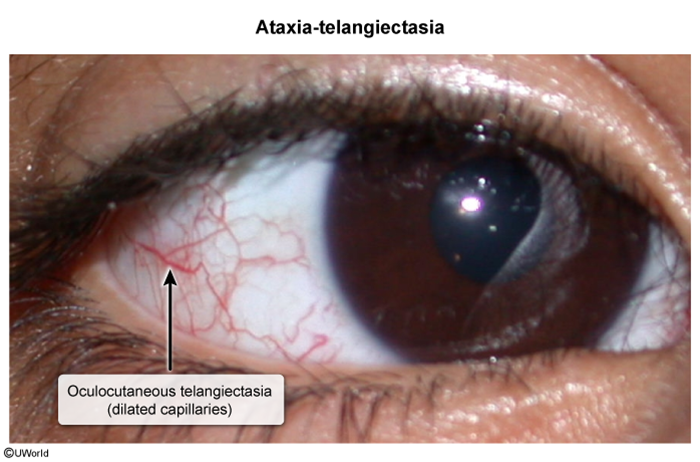
- Immunodeficiency: Combined B- and T-cell defect leading to recurrent sinopulmonary infections.
- Other findings:
- Choreoathetosis, myoclonus, peripheral neuropathy.
- Failure to thrive and short stature.
- Endocrine abnormalities (e.g., insulin resistance, hypogonadism).
Diagnostics
- Initial / Key Labs:
- ↑ Serum alpha-fetoprotein (AFP): Hallmark laboratory marker (elevated in >95% of pts after 8 mo of age).
- Dysgammaglobulinemia: Marked deficiency of IgA (most common), IgG (specifically IgG2/IgG4), and IgE. c
- Lymphopenia: Especially ↓ CD4+ and CD8+ T-cell counts.
- Confirmatory / Gold Standard:
- Genetic testing: Identification of biallelic pathogenic variants in the ATM gene.
- ATM protein analysis: Immunoblotting demonstrating absent or markedly reduced ATM protein expression.
- Imaging:
- Brain MRI: Progressive cerebellar vermis and hemispheric atrophy.
- Special Consideration:
- Avoid diagnostic ionizing radiation (e.g., unnecessary CT, conventional radiographs) due to defective DNA repair and risk of chromosomal damage.