- Severe mucocutaneous reactions characterized by necrosis and detachment of the epidermis.
- Distinguished by Body Surface Area (BSA) involvement:
- SJS: <10% BSA
- SJS/TEN Overlap: 10–30% BSA
- TEN: >30% BSA c
Epidemiology
Etiology
- Adverse Drug Reaction (most common cause):
- Allopurinol
- Antiepileptics (Lamotrigine, Carbamazepine, Phenytoin, Phenobarbital)
- Antibiotics (Sulfonamides, Penicillins)
- NSAIDs (Piroxicam)
- Infections: Mycoplasma pneumoniae (common in children), CMV, HSV.
- Idiopathic (~25-50% of cases).
Pathophysiology
- Type IV Hypersensitivity reaction (T-cell mediated).
- Cytotoxic T-cells and NK cells release granulysin/perforin/granzyme B → massive keratinocyte apoptosis.
- Separation of epidermis from dermis at the dermo-epidermal junction.
Clinical features
- Prodrome: Fever, influenza-like Sx (1–3 days prior to skin eruption).
- Skin:
- Macules with purpuric centers (targetoid lesions) → coalesce to form bullae/sheets of skin sloughing.
- (+) Nikolsky sign: Slight rubbing of the skin results in exfoliation of the outermost layer.
- Skin is exquisitely tender.
- Mucosal: Involvement of 2+ mucous membranes (eyes, mouth, genitals) is characteristic (90%+ of cases).
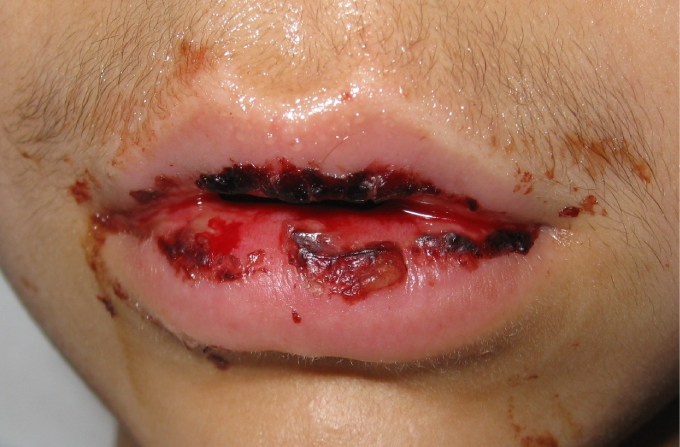
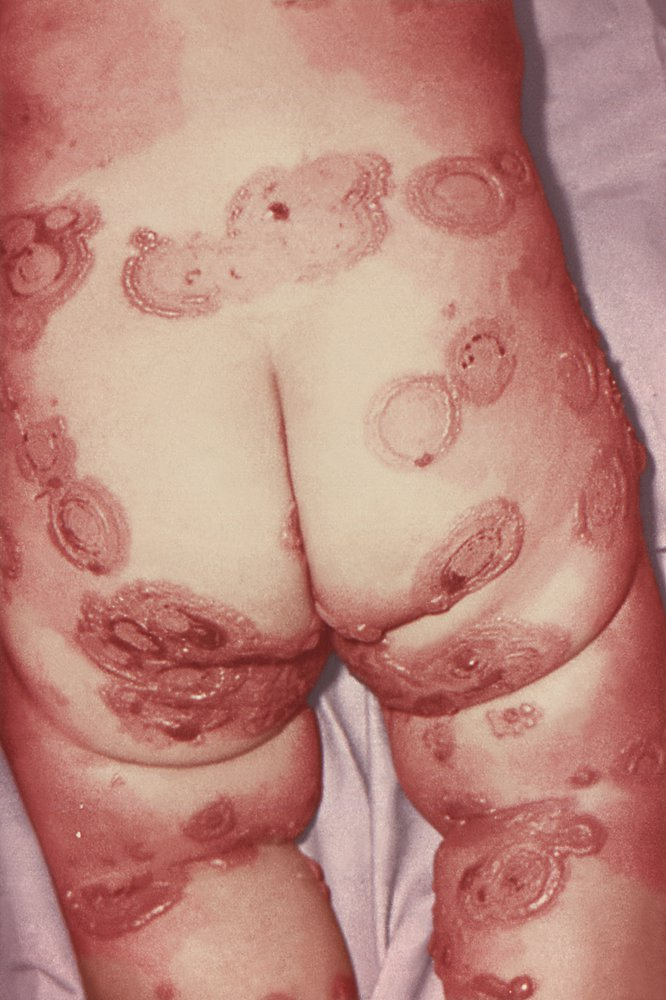
Tip
The involvement of mucous membranes differentiates SJS from staphylococcal scalded skin syndrome (SSSS) in which mucous membranes are spared!
Diagnostics
- Clinical Dx predominantly.
- Skin Biopsy:
- Full-thickness epidermal necrosis.
- Subepidermal bullae.
- Minimal inflammatory infiltrate in the dermis (distinguishes from Erythema Multiforme).
- Differential Diagnosis
- Staphylococcal Scalded Skin Syndrome (SSSS):
- Exotoxin-mediated cleavage of desmoglein-1.
- Superficial splitting (granular layer).
- Usually young children; mucosa spared.
- Erythema Multiforme (EM):
- <10% BSA; classic target lesions.
- Often assoc. with HSV.
- Drug Reaction with Eosinophilia and Systemic Symptoms (DRESS):
- Eosinophilia, systemic organ involvement (liver, kidney), morbilliform rash.
- Staphylococcal Scalded Skin Syndrome (SSSS):
Treatment
- First-Line / Immediate Interventions:
- Immediate discontinuation of all suspected culprit drugs (single most critical prognostic action).
- Urgent transfer to a specialized Burn ICU / Burn Center (dramatically reduces sepsis and mortality). c
- Aggressive Supportive Care (Burn Protocol):
- Fluid & Electrolyte Resuscitation: IV crystalloids titrated to maintain urine output 0.5–1 mL/kg/hr (requires ~2/3 of Parkland formula volume used for thermal burns).
- Wound Care: Strict barrier isolation and aseptic technique; non-adherent silicone or silver-impregnated dressings; gentle cleansing; avoid silver sulfadiazine (contraindicated due to sulfa content!).
- Thermoregulation: Maintain high ambient room temperature (30–32°C) to prevent hypothermia.
- Enteral Nutrition: Early nasogastric/nasojejunal feeding to prevent hypercatabolic muscle wasting and bacterial translocation.
- Pain Control: Scheduled IV opioids / PCA.
- Urgent Multispecialty Consultations:
- Ophthalmology (Immediate): Lubricating drops (preservative-free), topical antibiotics/corticosteroids, lysis of adhesions, and early amniotic membrane grafting to prevent symblepharon and irreversible blindness.
- Urology / Gynecology: Prevent labial/vaginal synechiae, vaginal stenosis, and urethral strictures using topical barriers and soft silicone stents/dilators.
- Second-Line / Adjuvant Immunomodulatory Therapy:
- Cyclosporine: Calcineurin inhibitor that suppresses keratinocyte apoptosis; demonstrates mortality reduction when initiated early.
- IVIG: Blocks FasL-mediated keratinocyte apoptosis; mixed evidence.
- Anti-TNF-α Biologics (e.g., Infliximab, Etanercept): Halts hyperinflammatory cascade; used in specialized centers.
- Note: Systemic corticosteroids are controversial (ultra-short high-dose pulse within first 48 hrs may halt early progression; strictly contraindicated in late/extensive TEN due to ↑ fatal septicemia).
- Note: Prophylactic systemic antibiotics are strictly contraindicated (selects for resistant strains; initiate broad-spectrum IV Abx only upon objective signs of clinical sepsis/infection).
- Refractory:
- Plasmapheresis / Plasma Exchange (PLEX): Facilitates rapid clearance of culprit drug metabolites, FasL, and circulating cytokines.