Epidemiology
Etiology
- Pathogen
- Group A β‑hemolytic streptococci (Streptococcus pyogenes) produce erythrogenic exotoxin A, B, or C
- These exotoxins cause the rash of scarlet fever via a delayed-type skin reaction.
- Route of transmission: aerosol
Pathophysiology
Clinical features
- Prodrome: Sudden onset high fever, severe pharyngitis, headache, abdominal pain, vomiting.
- Enanthem:
- Strawberry tongue: White coating w/ red hyperemic papillae (“white strawberry”), evolving into a bright red, beefy tongue (“red strawberry”).
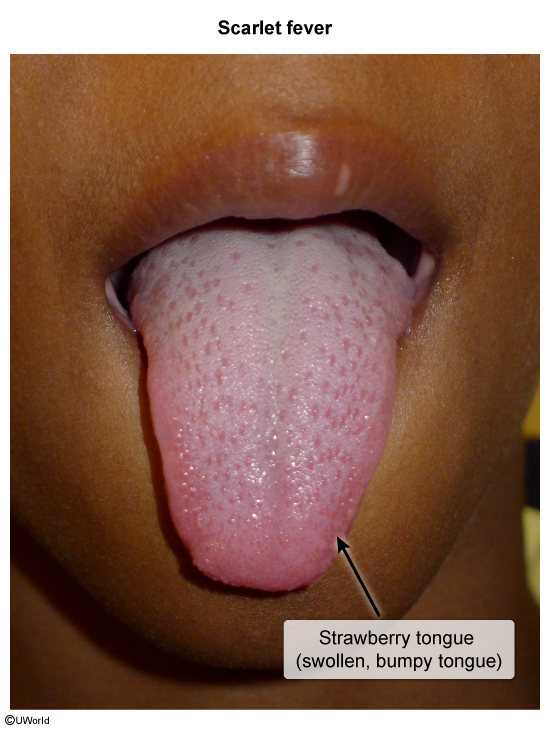
- Exudative pharyngitis/tonsillitis, palatal petechiae.
- Exanthem:
- “Sandpaper-like” rash: Fine, erythematous, micro-papular eruption; blanchable; feels rough to touch.
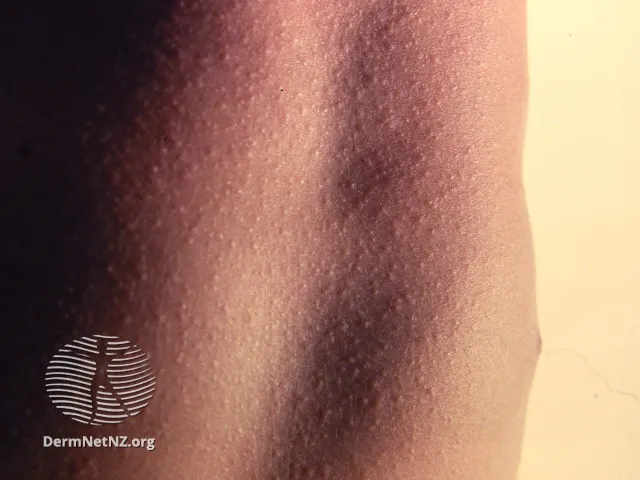
- Rash starts on neck/chest → spreads to trunk & extremities (spares palms & soles).
- Pastia lines: Accentuated, hyperpigmented, non-blanching linear petechiae in flexural creases (axilla, antecubital fossa).
- Perioral pallor: Facial erythema w/ distinct sparing of the circumoral region.

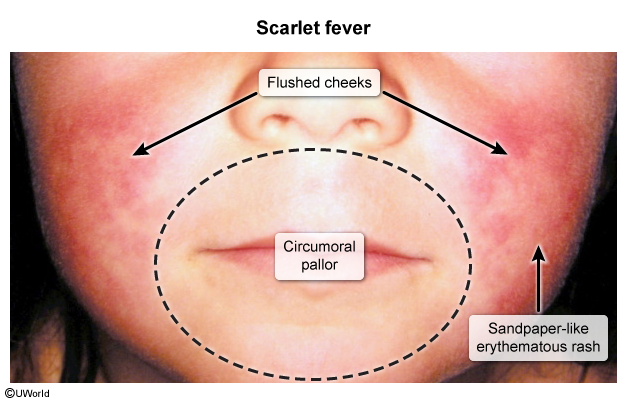
- Desquamation: Fine sheet-like peeling of skin (hands, feet, groin) during recovery (1–2 weeks post-onset). c
Diagnostics
| Feature | Scarlet Fever | Acute Rheumatic Fever |
|---|
| Timing | Concurrent with active GAS infection | Delayed (2–4 weeks post-infection) |
| Pathophysiology | Toxin-mediated (SPEs) | Immune-mediated (molecular mimicry) |
| Rash | ”Sandpaper” texture, diffuse, punctate | Erythema marginatum (serpiginous, clear centers) |
| Key Finding | Strawberry tongue, Pastia’s lines | Migratory polyarthritis, carditis, chorea |
| Treatment Goal | Eradicate active infection, prevent ARF | Reduce inflammation, prevent recurrence with long-term prophylaxis |
Childhood exanthems
| Disease | Pathogen | Classic Presentation & Buzzwords |
|---|
| Measles | Measles virus | 4 C’s (Cough, Coryza, Conjunctivitis, Koplik spots).
Rash: Face → Body (Confluent).
Assoc: Vitamin A deficiency. |
| Rubella | Rubella virus | Post-auricular LAD.
Rash: Face → Body (spares 3 days, non-confluent).
Assoc: Congenital (PDA, cataracts, deaf), Adult arthritis. |
| Roseola | HHV-6 | High fever breaks → Rash appears.
Rash: Trunk → Face.
Assoc: Febrile seizures. |
| Fifth Disease | Parvovirus B19 | ”Slapped Cheek” → Lacy/Reticular body rash.
Assoc: Aplastic crisis (Sickle Cell), Hydrops fetalis. |
| Varicella | VZV | ”Dewdrop on a rose petal”.
Lesions in different stages of healing. t
Rash: Trunk → Extremities. |
| Scarlet Fever | Strep pyogenes | Sandpaper rash, Strawberry tongue, Circumoral pallor.
Assoc: Strep throat, Desquamation (palms/soles). |
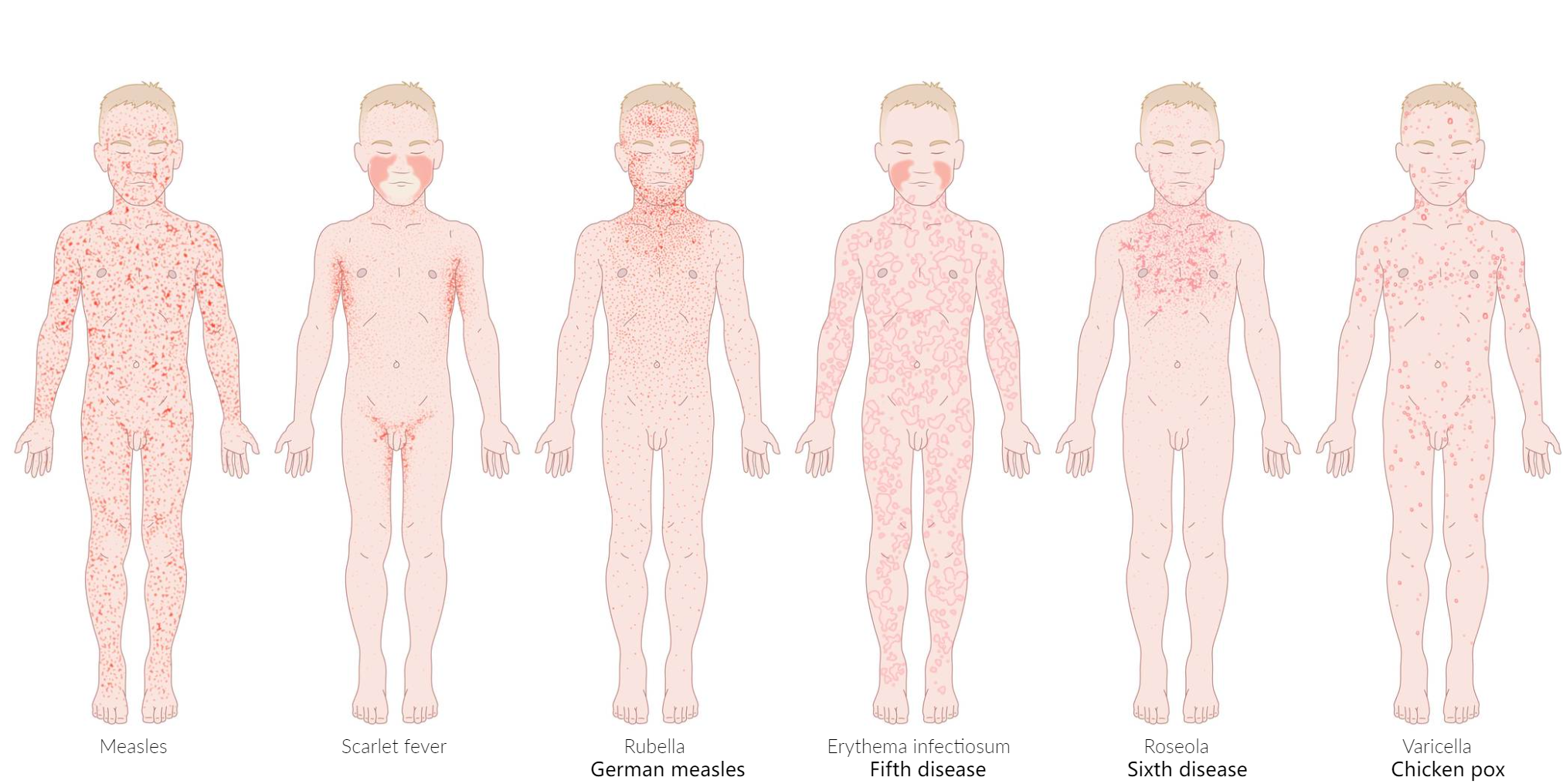
Fever-rash relationship
- Measles (Rubeola): Fever first (with cough, coryza, conjunctivitis) → Rash appears 3-5 days later, spreading from head to toe.
- Rubella (German Measles): Low-grade fever → Rash appears 1-2 days later, spreading quickly from head to toe.
- Scarlet Fever: Fever and sore throat begin together → “Sandpaper” rash appears 1-2 days later.
- Erythema Infectiosum (Fifth): Low-grade fever/prodrome resolves → “Slapped cheek” rash appears days later.
- Roseola Infantum (Sixth): High fever for 3-5 days → Fever breaks → Rash appears after the fever is gone.
- Varicella (Chickenpox): Fever and vesicular rash appear at the same time (lesions in various stages).
Link to original
Treatment
- Initiate one of the recommended antibiotic regimens for acute GAS pharyngitis, e.g.:
- Oral penicillin V or amoxicillin
- Nonsevere penicillin reaction: oral cephalosporins (e.g., cephalexin)
- Severe penicillin reaction: oral macrolides (e.g., azithromycin) or clindamycin