Hordeolum and chalazion
- Definitions & Pathophysiology:
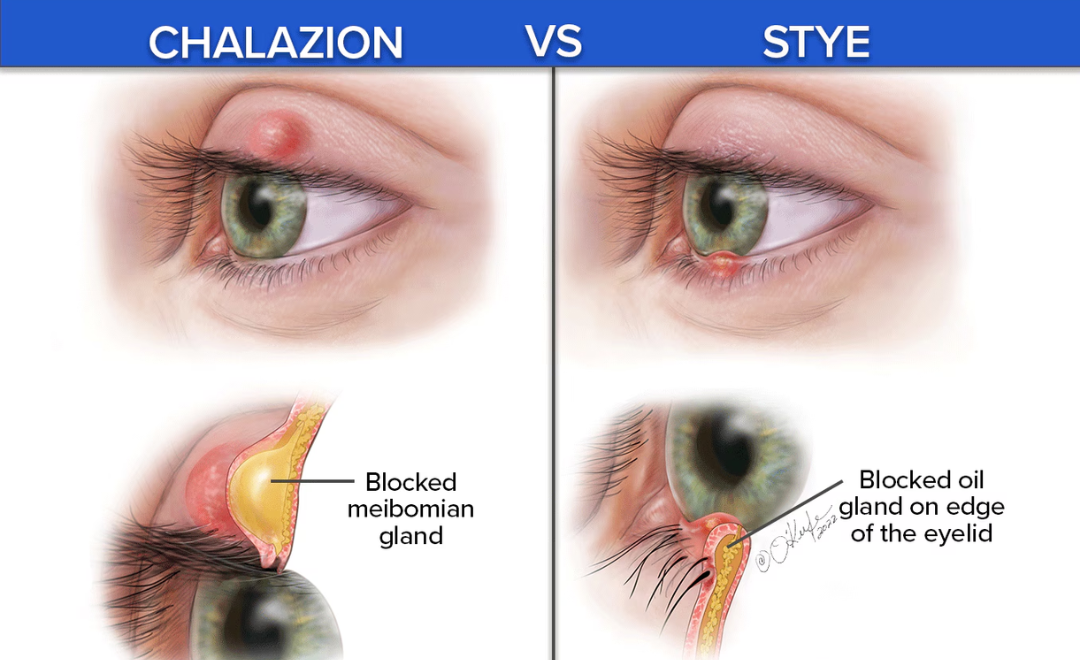
- Hordeolum (Stye): Acute, localized bacterial infection (mostly S. aureus) of the eyelid glands.
- External: Glands of Zeis or Moll (eyelash follicle).
- Internal: Meibomian (tarsal) gland.
- Chalazion: Chronic, sterile, granulomatous obstruction of a meibomian gland; often secondary to an unresolved internal hordeolum.
- Clinical Distinction (High-Yield):
- Hordeolum: Painful, tender, erythematous, acute nodule; may have a visible pustule.
- Chalazion: Painless, hard, rubbery, chronic, non-tender nodule deep in the eyelid.
- Diagnosis:
- Clinical inspection/eversion of eyelid.
- Biopsy required for recurrent or non-healing chalazia to r/o sebaceous (meibomian) gland carcinoma (look for lash loss/madarosis).
- Management:
- First-line (Both): Warm compresses (10–15 min, 3–4x daily) to liquefy secretions and promote spontaneous drainage. c
- Hordeolum:
- Topical Abx (erythromycin) if draining or associated blepharitis.
- Oral Abx (cephalexin) only if signs of spreading preseptal cellulitis.
- Chalazion:
- Persistent (>4–6 weeks): Intralesional corticosteroid injection (triamcinolone) or incision and curettage (I&C).
- Complications:
- Large chalazion compressing cornea → acquired astigmatism / blurred vision.
- Hordeolum spread → preseptal cellulitis.