Femoral neck fracture

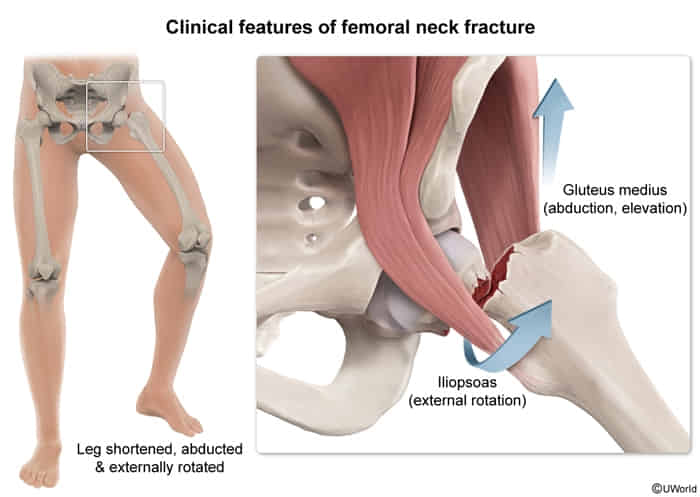
  • Clinical features
    • Groin pain
    • Shortened and externally rotated leg
FeatureFemoral Neck FracturePosterior Hip Dislocation
Classic PatientElderly (osteoporosis) after a fall.Young patient after major trauma (MVA).
Limb PositionShortened & EXTERNALLY Rotated.Shortened & INTERNALLY Rotated.
Key ComplicationAvascular Necrosis (AVN) of femoral head.Sciatic Nerve Injury; AVN if reduction is delayed.
ManagementSurgical Repair/Replacement (ORIF or Arthroplasty).Emergent Closed Reduction (<6 hours).
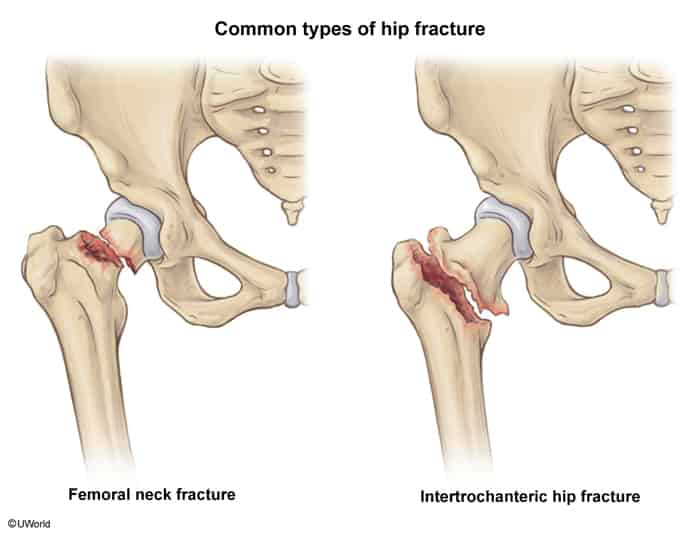
FeatureIntertrochanteric FxFemoral Neck Fx
LocationExtracapsularIntracapsular
Blood SupplyGoodTenuous (Medial Femoral Circumflex a.)
Hallmark RiskMalunionAvascular Necrosis (AVN)
Typical TxORIF (Dynamic Hip Screw)Arthroplasty (in elderly)
PresentationLeg shortened & externally rotatedLeg shortened & externally rotated (often less severe, capsule limits the degree)

Management

  • Preoperative Stabilization:
    • Surgical Timing: Goal is definitive repair within 24–48 hours (reduces 30-day and 1-year mortality, pressure ulcers, and pneumonia).
    • Analgesia: Multimodal (IV acetaminophen, low-dose opioids); regional nerve blocks (e.g., fascia iliaca block, femoral nerve block) reduce delirium and opioid requirements.
    • Medical Optimization: Correct active electrolyte imbalances, reverse urgent anticoagulation (e.g., vitamin K, 4F-PCC, idarucizumab, andexanet alfa), manage cardiac instability.
  • Surgical Repair (by Anatomic Location):
    • Femoral Neck Fractures (Intracapsular):
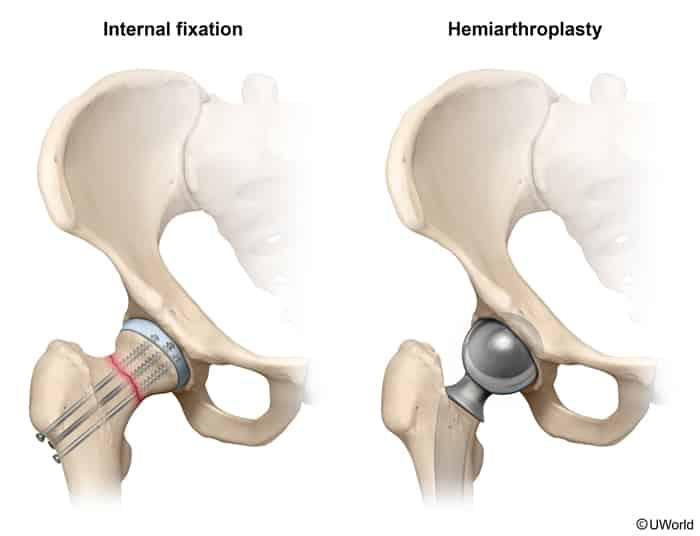
      • Displaced (Elderly): Hemiarthroplasty or Total Hip Arthroplasty (THA) (avoids high nonunion/AVN risk).
      • Nondisplaced (Elderly): Percutaneous cannulated screw fixation.
      • Young/Active Patients: Urgent Open/Closed Reduction and Internal Fixation (ORIF) to attempt femoral head preservation.
    • Intertrochanteric Fractures (Extracapsular):
      • Intramedullary (Cephalomedullary) Nail or Dynamic Sliding Hip Screw (DHS).
    • Subtrochanteric Fractures:
      • Cephalomedullary Nail with long intramedullary rod.
  • Postoperative Care & Secondary Prevention:
    • Early Mobilization: Out of bed and weight-bearing within 24 hours post-op.
    • VTE Prophylaxis: Pharmacologic (LMWH, fondaparinux, or direct oral anticoagulants) for a minimum of 10–14 days (extended prophylaxis up to 35 days preferred).
    • Secondary Fracture Prevention:
      • Perform DXA scan post-discharge.
      • Initiate Bisphosphonates (e.g., alendronate, zoledronic acid) or teriparatide.
      • Calcium and Vitamin D supplementation.
      • Fall risk assessment, home safety evaluations, physical therapy.