It affects the inverse anatomical regions compared to common acne.
- Acne Vulgaris: Affects extensor surfaces and open areas (Face, Back, Chest).
- Acne Inversa: Affects intertriginous/flexural areas (Axilla, Groin, Perineum, Inframammary folds).
Epidemiology
Etiology
Pathophysiology
- Follicular occlusion (keratin plug) in apocrine-bearing skin (axilla, groin); NOT primarily infectious.
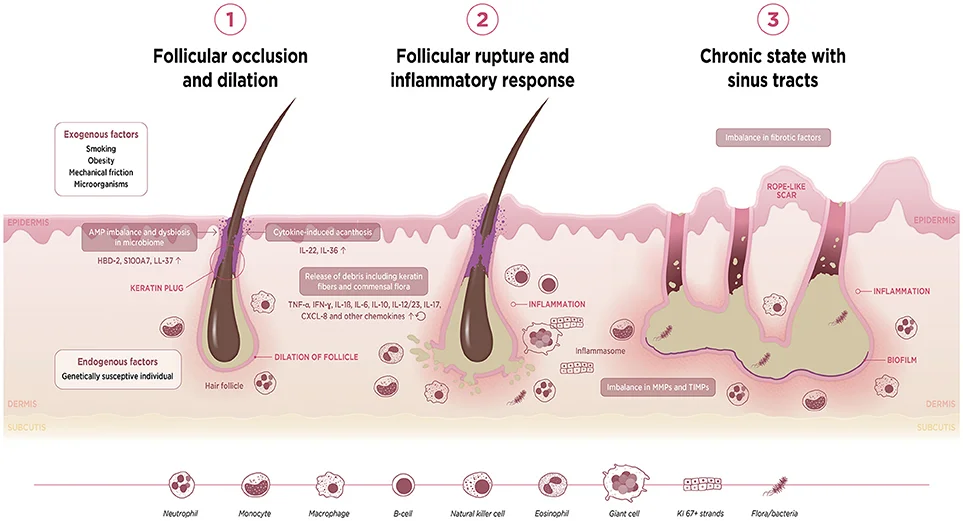
- Risk Factors: Smoking (major), Obesity, Metabolic syndrome.
Clinical features
- Sites: Intertriginous areas; axillae (most common), groin, perineum, inframammary folds.
- Hallmark Lesions:
- Tender subcutaneous nodules \rightarrow painful sterile abscesses.
- Chronic draining sinus tracts with purulent discharge.
- “Tombstone” double-ended open comedones.
- Hypertrophic rope-like bridged scars.
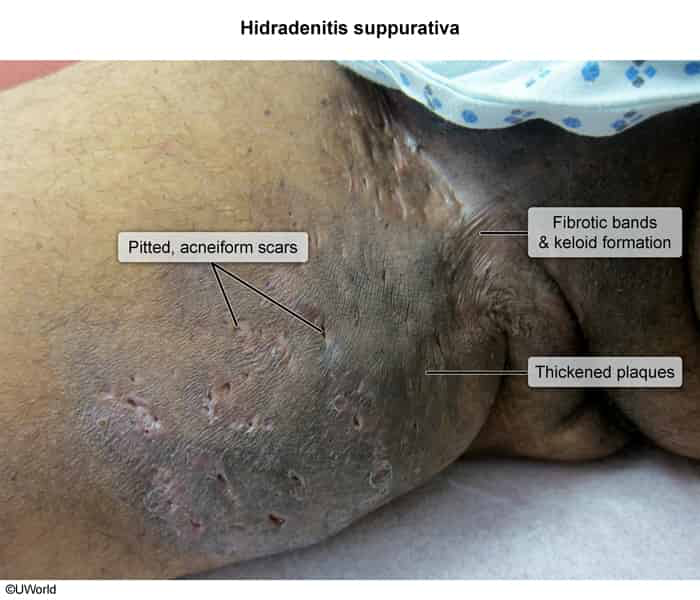
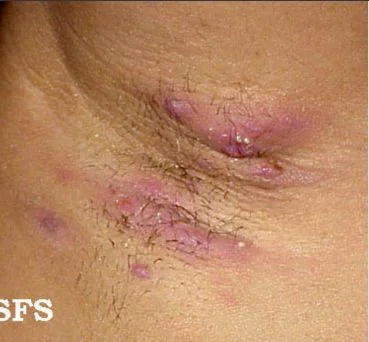
- Hurley Staging:
- Stage I: Isolated abscesses; no sinus tracts or cicatrization.
- Stage II: Recurrent abscesses with sinus tracts and scarring; separated lesions.
- Stage III: Diffuse interconnected sinus tracts and extensive coalescent abscesses.
Diagnostics
Treatment
Tip
Antibiotics are used primarily for their anti-inflammatory and immunomodulatory properties
- General Measures: Smoking cessation, weight loss, antiseptic washes (chlorhexidine). Avoid routine simple I&D due to high recurrence.
- Hurley Stage I (Mild):
- First-line: Topical Clindamycin 1% (BID 12 weeks).
- Acute flare: Intralesional triamcinolone.
- Hurley Stage II (Moderate):
- First-line: Oral Tetracyclines (e.g., Doxycycline 10–12 weeks).
- Second-line: Oral Clindamycin + Rifampin.
- Surgical adjunct: Deroofing or punch debridement of tracts.
- Hurley Stage III (Severe / Refractory):
- First-line medical: Adalimumab (anti-TNF-α) or Secukinumab (anti-IL-17A).
- Definitive surgical: Wide local excision with healing by secondary intention or grafting.