- Pathophysiology
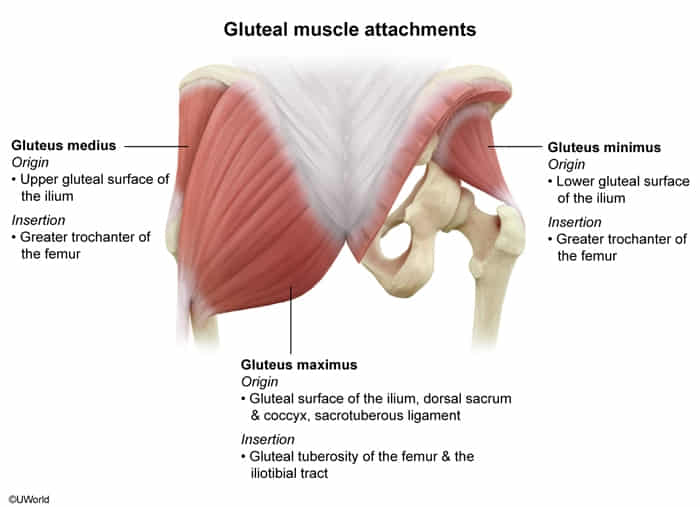
- Gluteus medius/minimus tendinopathy (degeneration/tear) at insertion.
- Note: True bursitis is rare; “Trochanteric Bursitis” is an outdated term.
- Risk factors: Female sex (age 40–60), obesity, hip/knee OA, leg-length discrepancy, repetitive overload (running).
- Clinical Presentation
- Lateral hip pain radiating down lateral thigh; never radiates below knee or to groin.
- Worse lying on affected side at night, climbing stairs, or prolonged standing.
- Focal point tenderness over greater trochanter (hallmark). c
- Pain reproduced with resisted hip abduction and passive hip adduction.
- True hip joint ROM (internal/external rotation) is preserved and painless.
- Differential Diagnosis
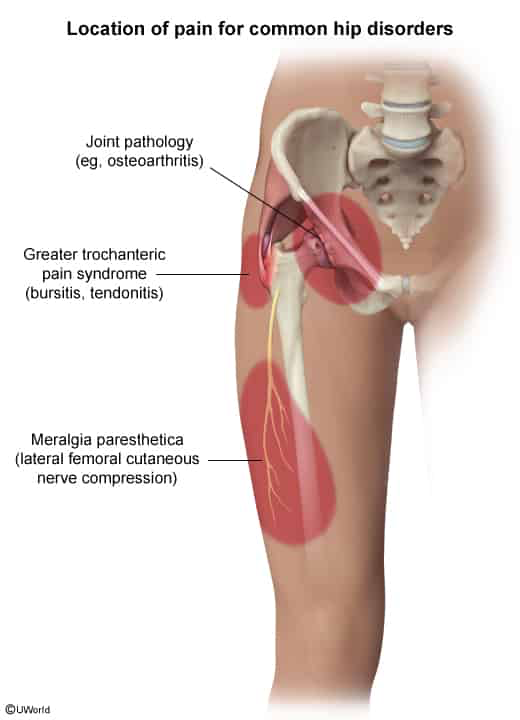
- Hip OA: Pain in groin/anterior thigh; restricted internal rotation ROM.
- Meralgia Paresthetica (Lateral Femoral Cutaneous Nerve Entrapment): Burning/numbness on anterolateral thigh; purely sensory; no bony tenderness.
- Lumbar Radiculopathy: Pain radiates past knee; (+) Straight Leg Raise (SLR); neuro deficits.
- Iliotibial Band (ITB) Syndrome: Pain at lateral knee/lateral femoral epicondyle, not hip.
- Management
- Dx: Clinical (X-ray rules out bony pathology).
- Tx: NSAIDs, Activity modification, Physical Therapy, Steroid injection (refractory).