Basic metabolic panel
BUN (Blood Urea Nitrogen)
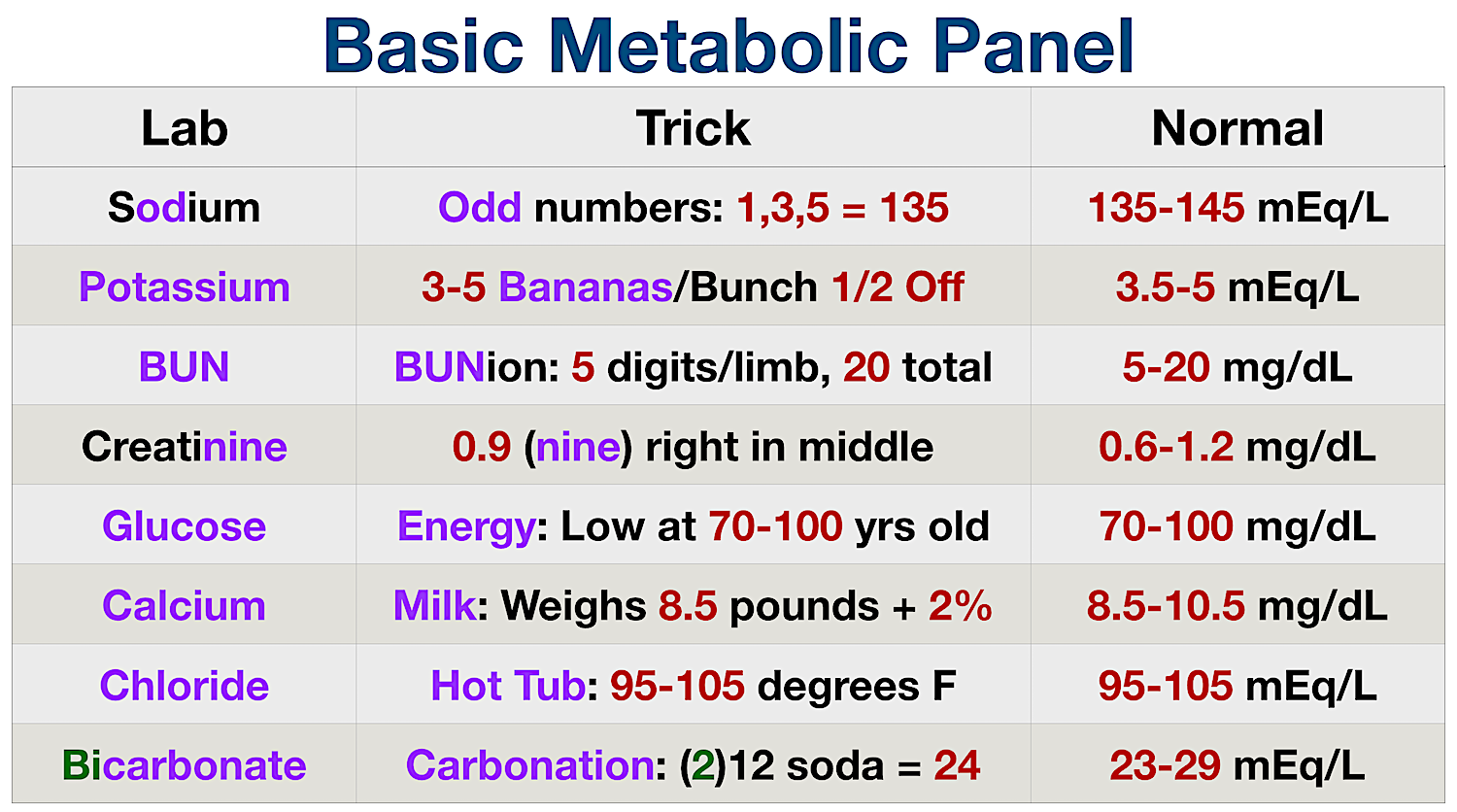
The basic metabolic panel also assesses renal function, which includes a BUN and creatinine. The normal range for BUN is about 5-20 mg/dL.
The Trick: Use the word “bun” to think of bunion. Bunions are typically located on the toes or digits, and we have 5 digits per extremity which totals 20 digits. This will help you remember the normal range for BUN is 5-20 mg/dL.
Calcium
Calcium is another electrolyte measured in a BMP. The normal range for calcium is 8.5-10.5 mg/dL.
The Trick: When you think of calcium, think of milk. A gallon of milk weighs about 8.5 pounds. Then think of 2% milk to help you remember to add 2 to the 8.5. This will give you the normal range for calcium of 8.5-10.5 mg/dL.
Glucose
A BMP also measures glucose. A normal glucose level is 70-100 mg/dL.
The Trick: When you think of glucose, think of energy. Our energy starts to decline during our elderly years, especially when we are 70-100 years old. This will help you remember the normal range for glucose is 70-100 mg/dL.
PTH
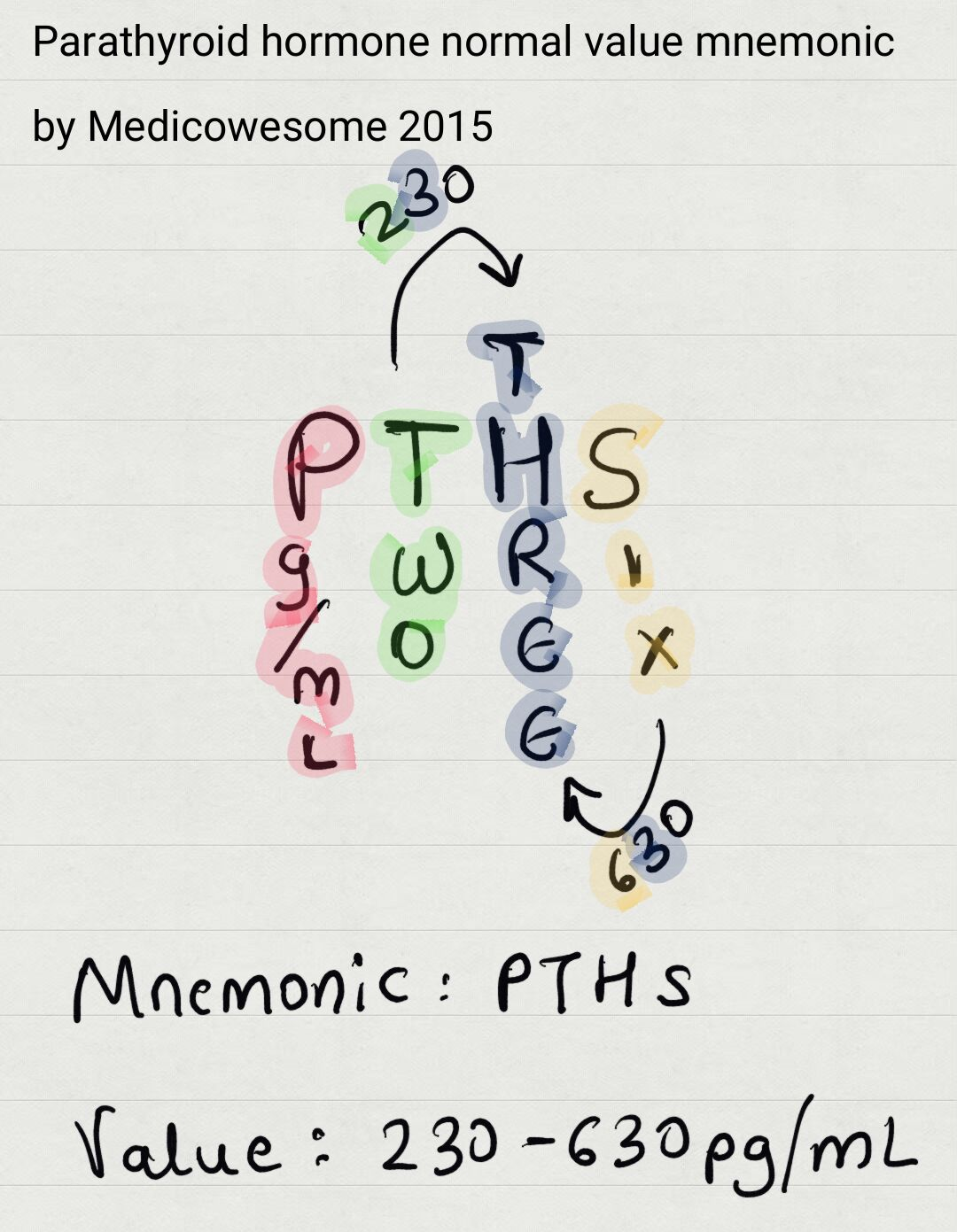
- 10-65 pg/mL
Renal
- GFR: 90 to 120 mL/min/1.73 m2
- FF: 20%
- RRF: GFR × FF
Comprehensive metabolic panel
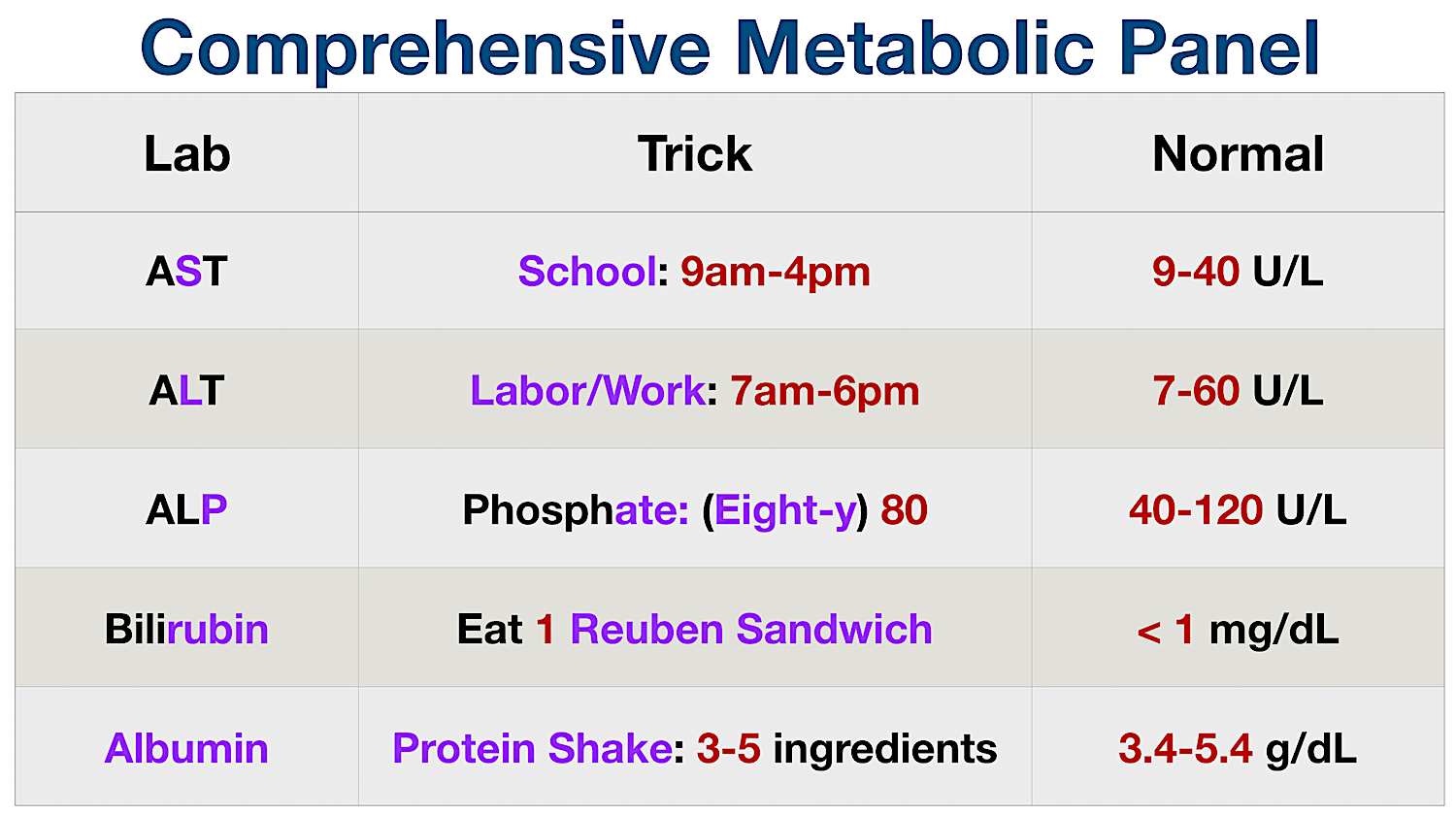
Protein
- Total: 6-8 g/fL
- Albumin: 60% of total protein
Coagulation studies
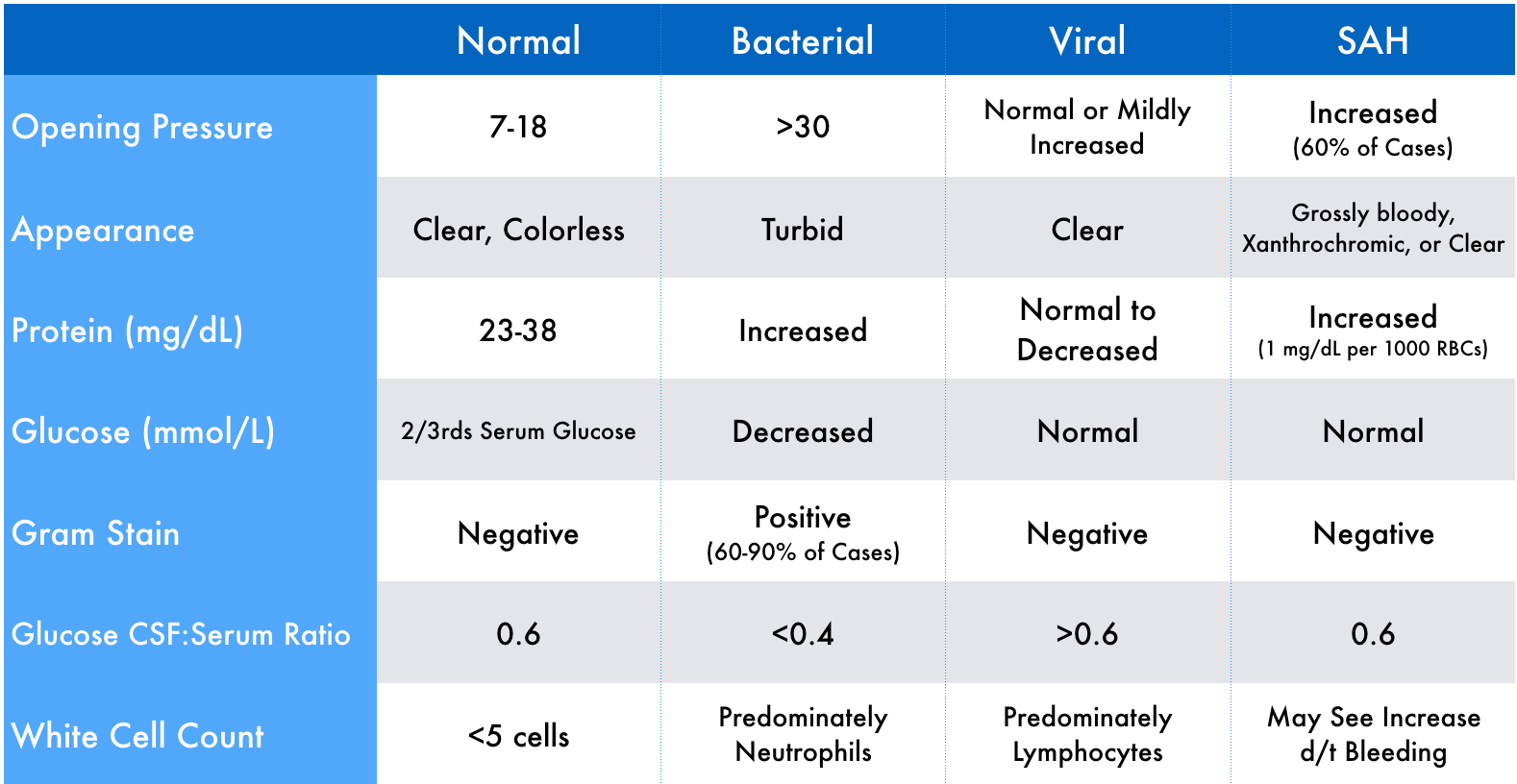
Cerebrospinal Fluid (CSF) values
WBC parameters
- Normal WBC range: 4,500–11,000/µL.
- WBC Differential Components:
- Neutrophils (PMNs): 40–70%. Principal defense against bacterial infections.
- Lymphocytes: 20–40%. T-cells, B-cells, NK cells. Principal defense against viral infections.
- Monocytes: 2–8%. Phagocytic cells that mature into macrophages.
- Eosinophils: 1–4%. Involved in parasitic infections and allergic/hypersensitivity reactions. c
- Basophils: 0.5–1%. Involved in immediate hypersensitivity reactions.
Urinalysis
- pH:
- Normal: 4.5–8.0.
- Alkaline (>7.0): Urease-producing bacteria (e.g., Proteus mirabilis), distal RTA (type 1).
- Acidic (<5.5): Uric acid stones, proximal RTA (type 2) post-bicarbonate depletion.
- Serum osmolality: 275-295 mOsm/kg c