Epidemiology
Etiology
Caused by superantigen toxins from Staphylococcus aureus (TSST-1) or Streptococcus pyogenes (SpeA, SpeC).
- Staphylococcal TSS:
- Source: Often associated with tampon use, nasal packing, or post-surgical wounds. c3
- Bacteremia: Usually negative; it’s a localized infection with systemic toxin effects.
- Streptococcal TSS (STSS):
- Source: Associated with an invasive infection, typically of the skin/soft tissue (e.g., necrotizing fasciitis, cellulitis).
- Bacteremia: Frequently positive.
- Prognosis: Higher mortality rate than staphylococcal TSS.
Pathophysiology
- Superantigen production: Causative organisms (S. pyogenes and S. aureus) produce superantigens
- Superantigen-mediated T-cell activation
- Superantigens bypass processing and presentation by antigen-presenting cells.
- Superantigens directly connect the MHC class II molecule on antigen-presenting cells to the T-cell receptor on T-cells by forming a bridge outside of the normal binding sites → nonspecific T-cell activation → rapid activation of excessive numbers of T cells → massive cytokine release
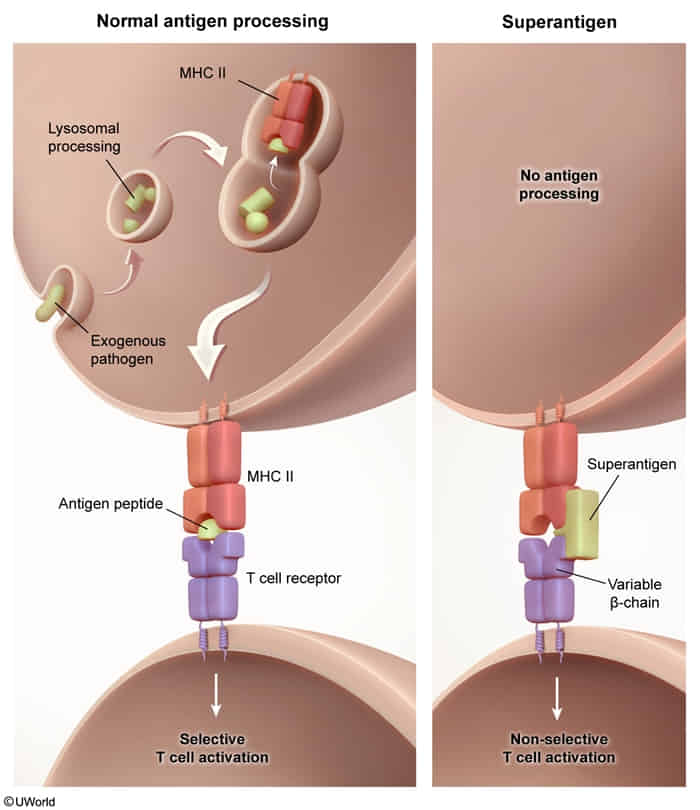
- SIRS: ↑↑↑ Cytokines → generalized endothelial disruption → capillary leak syndrome → generalized edema → intravascular hypovolemia → organ dysfunction and disseminated intravascular coagulation (DIC)
Clinical features
- Rapid-Onset Triad:
- High Fever: Temp > 38.9°C (102°F).
- Hypotension: SBP < 90 mmHg, orthostasis, or frank septic shock.
- Diffuse Rash: Erythematous, macular “sunburn-like” erythroderma; affects palms and soles.
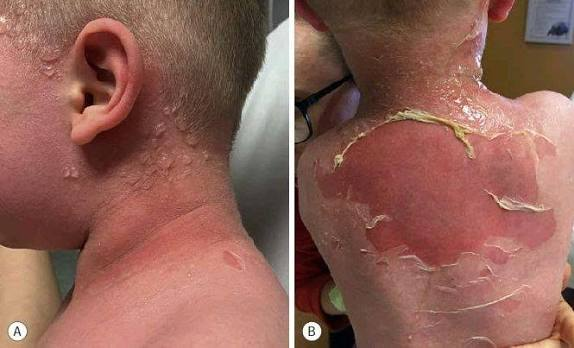
- Late Feature: Desquamation of palms and soles 1–2 weeks after illness onset.
- Multisystem Involvement (≥ 3 required for clinical definition):
- GI: Profuse vomiting, watery diarrhea.
- Musculoskeletal: Severe myalgias, elevated CK.
- Mucous Membranes: Hyperemia (conjunctival, vaginal, pharyngeal; “strawberry tongue”).
- Renal: Elevated BUN/Cr, sterile pyuria.
- Hepatic: Elevated AST, ALT, total bilirubin.
- Hematologic: Thrombocytopenia (< 100,000/μL).
- CNS: Disorientation, altered mental status without focal deficits.