Overview
Skin and soft tissue infections (SSTIs) range from superficial bacterial infections to life-threatening deep tissue necrosis.
Key Step 2 CK objective: Differentiate superficial vs. deep infections and determine when urgent surgical intervention is required.
Bacterial Skin Infections
Impetigo
Etiology : S. aureus (MCC) or S. pyogenes (GAS).Clinical Features :
Non-bullous : “Honey-colored” crusts on erythematous base, painful/pruritic, face/extremities.Bullous : Flaccid bullae w/ clear/yellow fluid, ruptures leaving thin brown crust (mediated by S. aureus exfoliative toxin).
Tx :
Localized: Topical mupirocin .
Widespread: PO Abx (cephalexin, dicloxacillin).
Complication : Poststreptococcal glomerulonephritis (PSGN). Note: Tx of impetigo prevents PSGN transmission but does not prevent PSGN development in the affected pt (unlike rheumatic fever in strep pharyngitis).
Erysipelas vs. Cellulitis
Erysipelas :
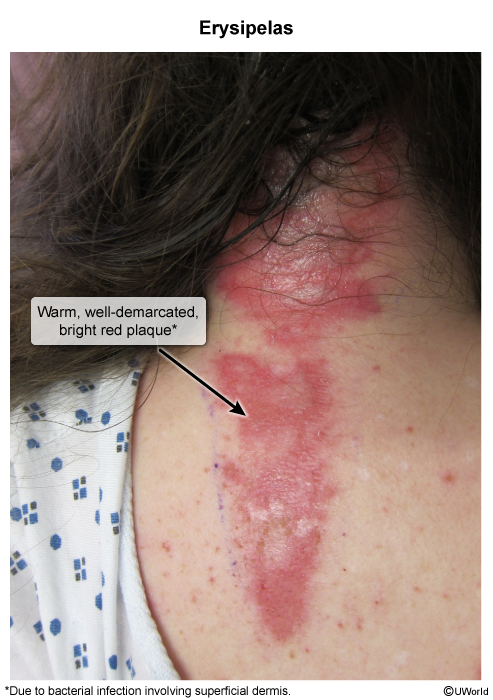
Pathology : Upper dermis and superficial lymphatics. MCC is Streptococcus pyogenes . c Risk factors:
Lymphatic obstruction (e.g., post-mastectomy, chronic lymphedema, venous insufficiency).Local skin barrier breakdown (tinea pedis, venous stasis ulcers, insect bites, trauma).
Prior history of erysipelas.
Obesity.
PE : Well-demarcated, raised, bright red border , rapid onset, systemic symptoms (fever, chills) early. Often on face or lower extremity.Tx : IV/PO penicillin, cephazolin, or cephalexin.
Cellulitis :
Pathology : Deep dermis and subcutaneous tissue. MCC is GAS or S. aureus (including MRSA).PE : Ill-defined, flat, erythematous borders , warm, tender, fluctuance suggests abscess.Tx :
Non-purulent (GAS): Cephalexin.
Purulent/Suspected MRSA: Clindamycin, TMP-SMX, doxycycline.
Severe/Systemic: IV vancomycin, linezolid, or daptomycin.
Abscess, Furuncles, & Carbuncles
Pathology : Wall of infection deep in dermis/hair follicles. MCC is S. aureus (often MRSA).PE : fluctuant, painful nodule. Carbuncle = coalescence of several furuncles.Tx :
Small (< 5 cm) without systemic symptoms: Incision & Drainage (I&D) alone.
Large (> 5 cm), systemic symptoms, or immunosuppressed: I&D + PO Abx (TMP-SMX or doxycycline).
Necrotizing Fasciitis
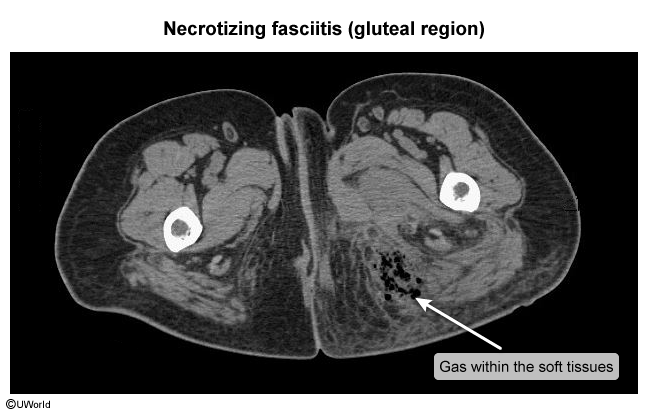
Pathology : Deep subcutaneous tissue and fascia necrosis. Polymicrobial (Type I) or Monomicrobial (Type II, GAS).PE : Pain out of proportion to exam , rapid progression, crepitus , purple/blue skin discoloration, bullae , anesthesia of affected skin .Dx : Clinical presentation is paramount. X-ray/CT showing gas in soft tissue is highly specific but non-sensitive. Do not delay Tx for imaging.Tx : Urgent surgical debridement (emergent consult) + empiric broad-spectrum IV Abx (e.g., vancomycin + piperacillin-tazobactam or meropenem + clindamycin to inhibit toxin production).
Perianal streptococcal dermatitis
Etiology & Demographics :
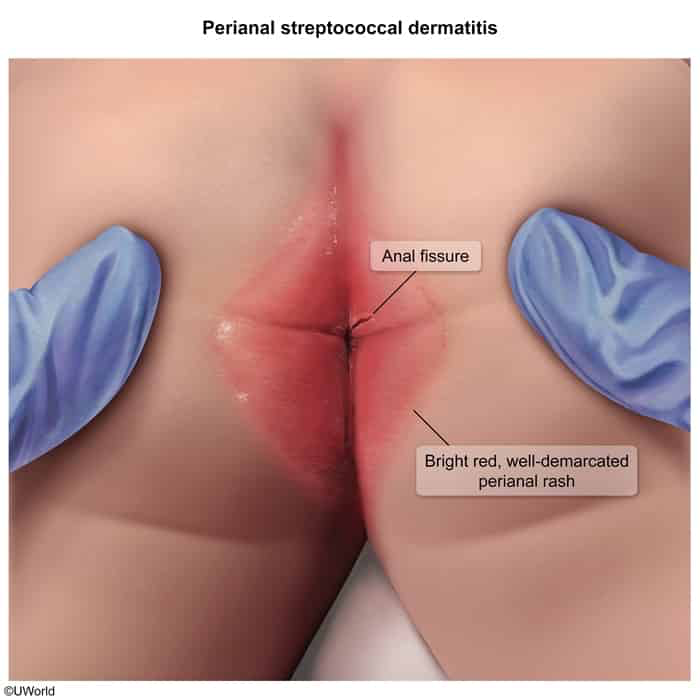
Group A Streptococcus (GAS) (S. pyogenes ); peak in children aged 6 months–10 years .Common autoinoculation from recent GAS pharyngitis or household contacts.
Clinical Presentation : c
Sharply demarcated, bright red perianal erythema extending 2–3 cm from anal verge.Intense pruritus , dyschezia (painful defecation), and blood-streaked stools .Systemically well, afebrile (differentiates from perianal cellulitis/abscess).
Diagnosis :
Initial : Perianal rapid strep antigen test (RADT) swab.Confirmatory/Gold Standard : Perianal skin swab culture (beta-hemolytic colonies).
High-Yield Differentials :
Candida : Involves intertriginous folds with satellite lesions ; (+) KOH prep.Pinworm (Enterobius ) : Nocturnal perianal pruritus, minimal erythema; (+) tape test.Child Sexual Abuse : Lacerations extending beyond verge, contusions, purulent STI discharge.
Management :
1st-line : Oral Penicillin V or Amoxicillin for 10–14 days.Penicillin allergy : Cephalexin (non-severe) or Clindamycin (severe/IgE-mediated).Exam Trap : Topical Abx alone are ineffective and lead to high recurrence rates.Supportive : Stool softeners to treat/prevent withholding-induced constipation.
Complications & Board Pearls :
Voluntary stool withholding leading to secondary constipation and encopresis .
PSGN can occur following cutaneous GAS.Acute Rheumatic Fever does NOT occur after cutaneous/perianal GAS (pharyngitis only).