Epidemiology
Etiology
Tip
It’s a fungus, not a bacterium!
- Caused by encapsulated yeast: Cryptococcus neoformans (worldwide, associated with pigeon droppings, immunocompromised hosts) and C. gattii (tropical/subtropical areas, can infect immunocompetent hosts).
- Transmission is via inhalation of spores. The primary infection is in the lungs, often asymptomatic.
- Hematogenous dissemination to the CNS is the most common and feared manifestation, especially in immunocompromised individuals.
- The thick polysaccharide capsule is a major virulence factor, inhibiting phagocytosis.
Pathophysiology
Clinical features
- CNS (Cryptococcal Meningoencephalitis):
- Subacute/chronic presentation (days to weeks): Progressive headache, low-grade fever, malaise, lethargy, confusion.
- Signs of ↑ ICP: Nausea/vomiting, papilledema, CN VI palsy (diplopia, lateral gaze limitation). c
- Classic meningeal signs (nuchal rigidity, Kernig/Brudzinski) are frequently absent due to blunted inflammatory response in severe immunosuppression.
- Pulmonary: Cough, dyspnea, pleuritic chest pain; can manifest as isolated nodule or diffuse infiltrate.
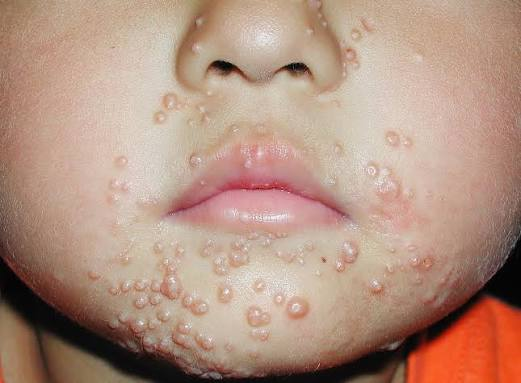
- Cutaneous: Disseminated disease with umbilicated papules (mimics Molluscum contagiosum). c
Diagnostics
- Diagnostic Lumbar Puncture (LP):
- Opening Pressure: Markedly elevated (> 200 mm H₂O) in > 50% of pts (due to capsular polysaccharides clogging arachnoid villi).
- CSF Analysis: Mild pleocytosis (usually < 50/mm³) with lymphocytic predominance, moderately ↑ protein, ↓ or normal glucose. c
- Latex agglutination test: positive for cryptococcal polysaccharide capsular antigen
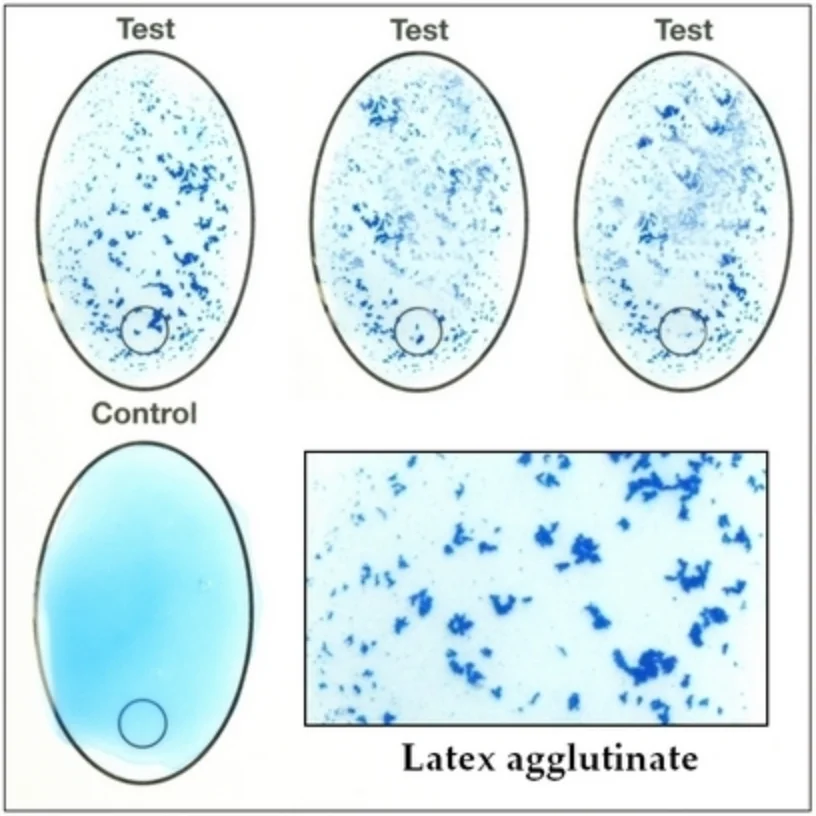
- High specificity and sensitivity
- Specimen: Blood or CSF
- CSF analysis
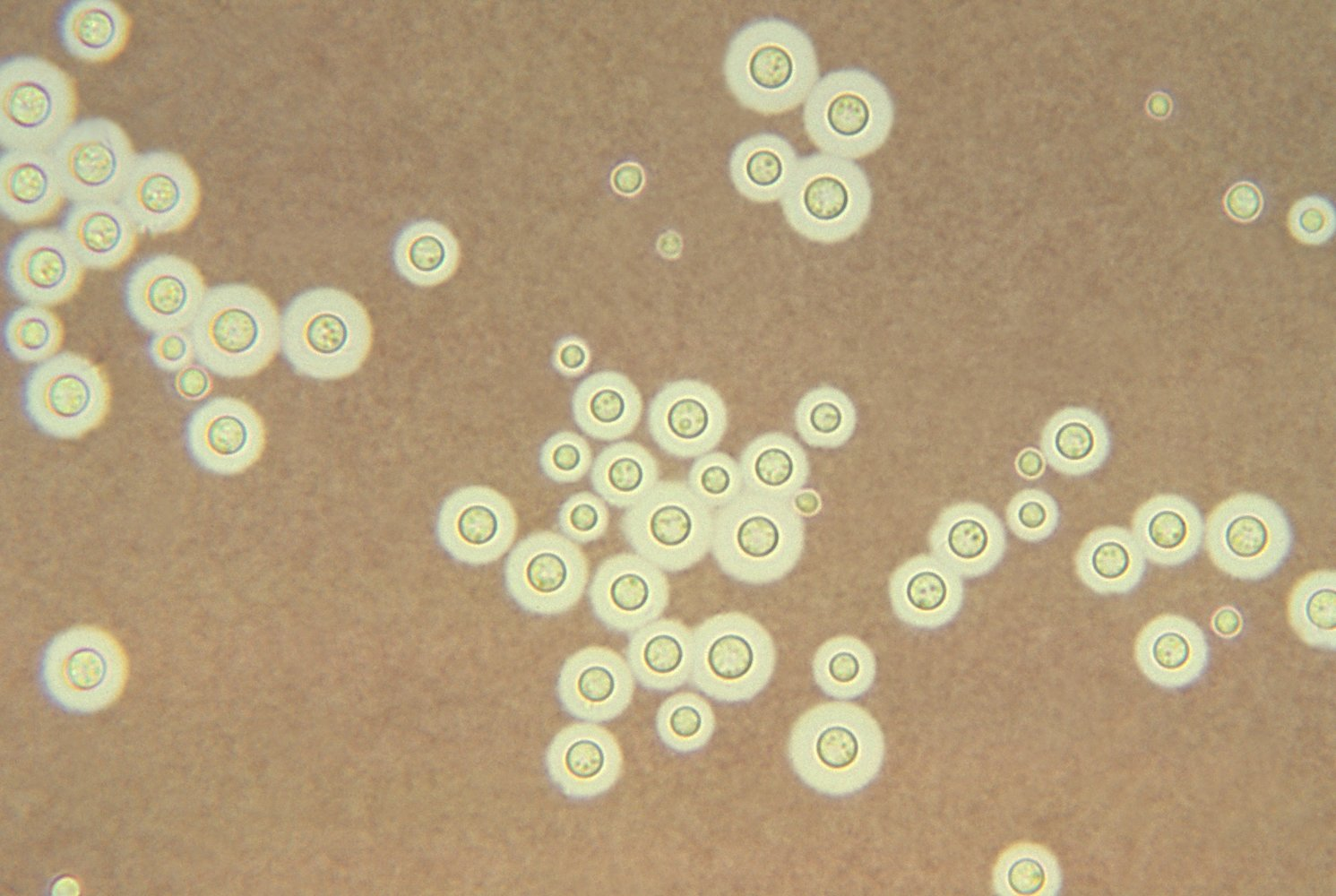
- India ink stain: clear halo; Round or oval budding yeast
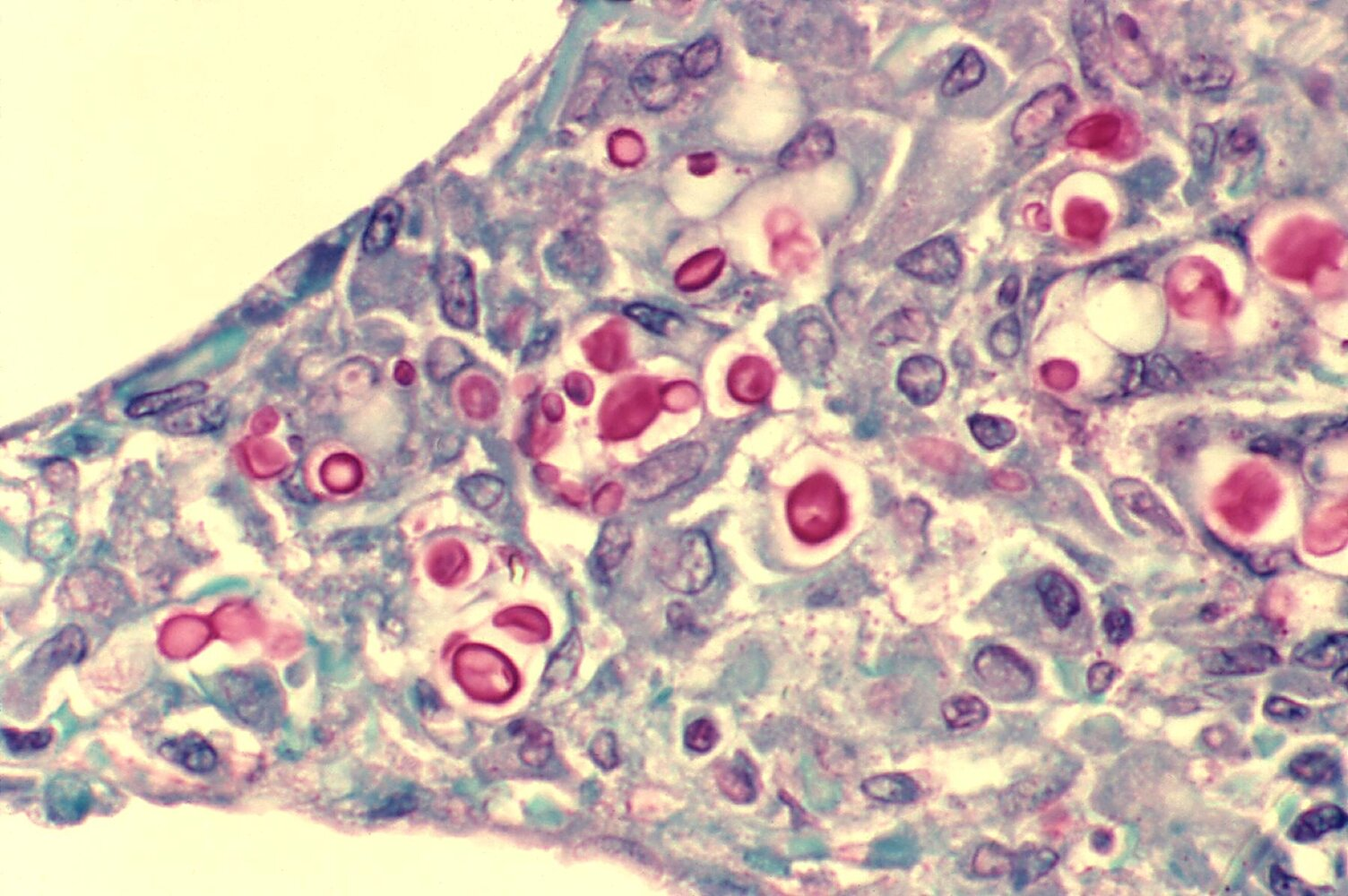
- Mucicarmine: stains the thick inner polysaccharide capsule bright red
- Fungal culture (Sabouraud agar) showing:
- 5–10 μm yeast
- Thick polysaccharide capsule
- Narrow, unequal budding
- India ink stain: clear halo; Round or oval budding yeast
- MRI: “Soap bubble” lesions in cryptococcal encephalitis
Treatment
- Cryptococcal Meningitis (3-Phase Antifungal Regimen):
- 1. Induction Phase (≥ 2 weeks):
- Liposomal Amphotericin B (IV) + Flucytosine (PO).
- Goal: CSF clearance. Duration extended if CSF culture remains positive at 2 weeks.
- 2. Consolidation Phase (8 weeks):
- High-dose Fluconazole (PO) (400–800 mg/day). c
- 3. Maintenance / Secondary Prophylaxis (≥ 1 year):
- Low-dose Fluconazole (PO) (200 mg/day).
- Stop maintenance only if: Treated for ≥ 1 year, asymptomatic, AND CD4 count > 100/mm³ for > 3 months on ART.
- 1. Induction Phase (≥ 2 weeks):
- Management of Elevated ICP:
- Serial Lumbar Punctures: Perform daily LPs until opening pressure normalizes (< 200 mm H2O).
- Temporary lumbar drain or VP shunt if elevated ICP persists despite repeated LPs.
- Contraindicated: Corticosteroids and acetazolamide are NOT recommended and worsen outcomes.
- ART Timing in HIV Patients:
- Delay ART initiation for 2–6 weeks after starting antifungal therapy to prevent Immune Reconstitution Inflammatory Syndrome (IRIS).
- Mild Mild-to-Moderate Pulmonary Disease (Non-CNS, Immunocompetent):
- Oral Fluconazole solo for 6–12 months.