Epidemiology


Etiology


Pathophysiology


Clinical features


Diagnostics

Endoscopic retrograde cholangiopancreatography (ERCP)

  • Indication: preferred confirmatory imaging for patients with a high likelihood of choledocholithiasis
    • Diagnostic and therapeutic
  • Complications
    • Post-ERCP pancreatitis: pancreatic inflammation secondary to ERCP c
      • Incidence: ∼ 3.5% 
      • Diagnostic criteria (all of the following)
        • New or worsened postinterventional abdominal pain
        • New or prolonged hospitalization (at least 2 days)
        • Serum amylase > 3 times the upper limit, measured > 24 hours after the intervention
      • Prevention: Consider indomethacin

Treatment


Complications

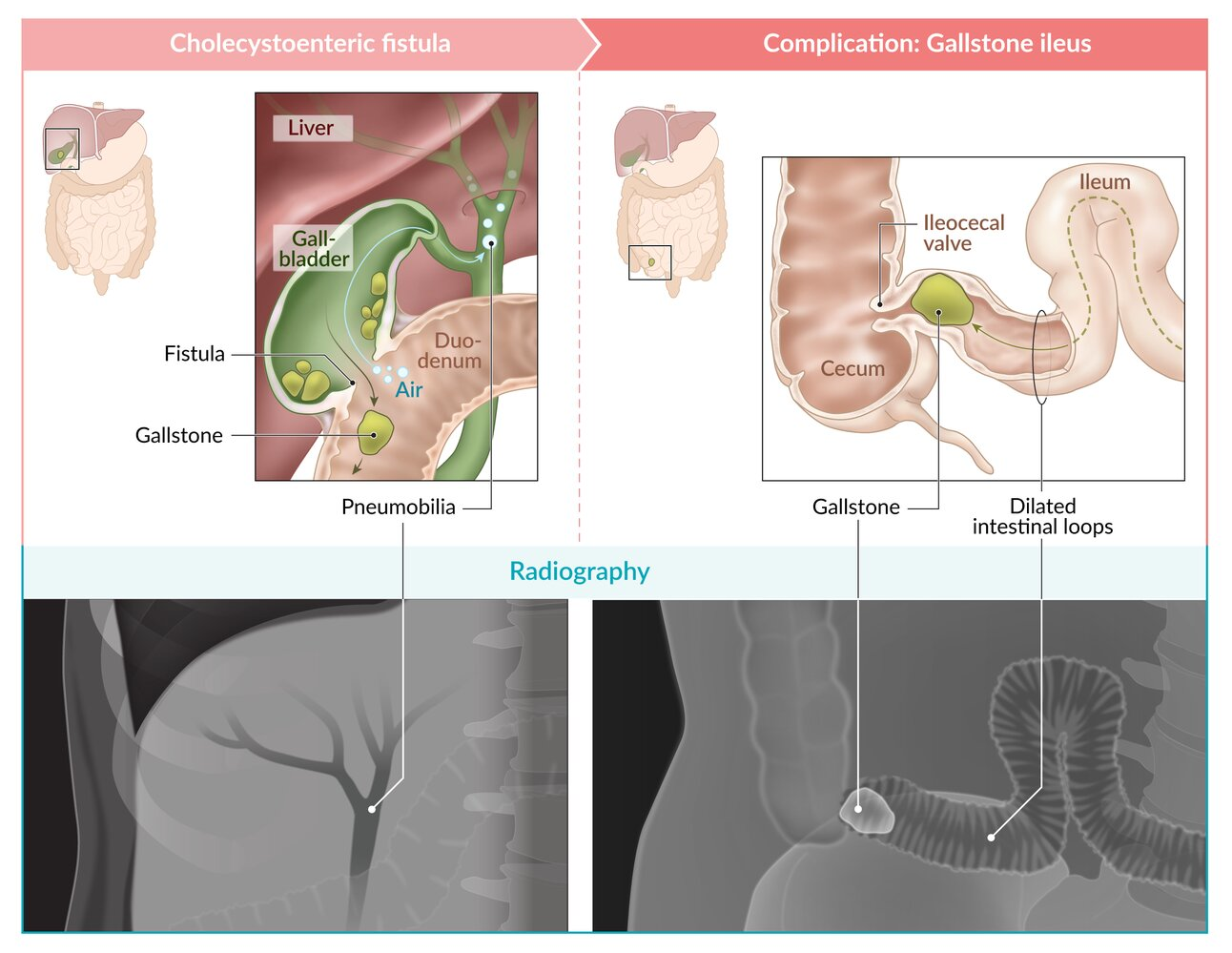
  • Gallstones ileus: mechanical bowel obstruction due to obstructive Gallstones
    • Pathophysiology: gallbladder perforation or Mirizzi syndromebiliary-enteric fistula formation (most commonly cholecystoenteric fistula) between the inflamed gallbladder and bowel → Gallstones passing down into bowel lumen
    • Sites of obstruction: terminal ileum, at ileocecal valve (most common)
    • Symptoms: distal bowel obstruction: features of mechanical bowel obstruction (abdominal pain and distention, nausea, vomiting)
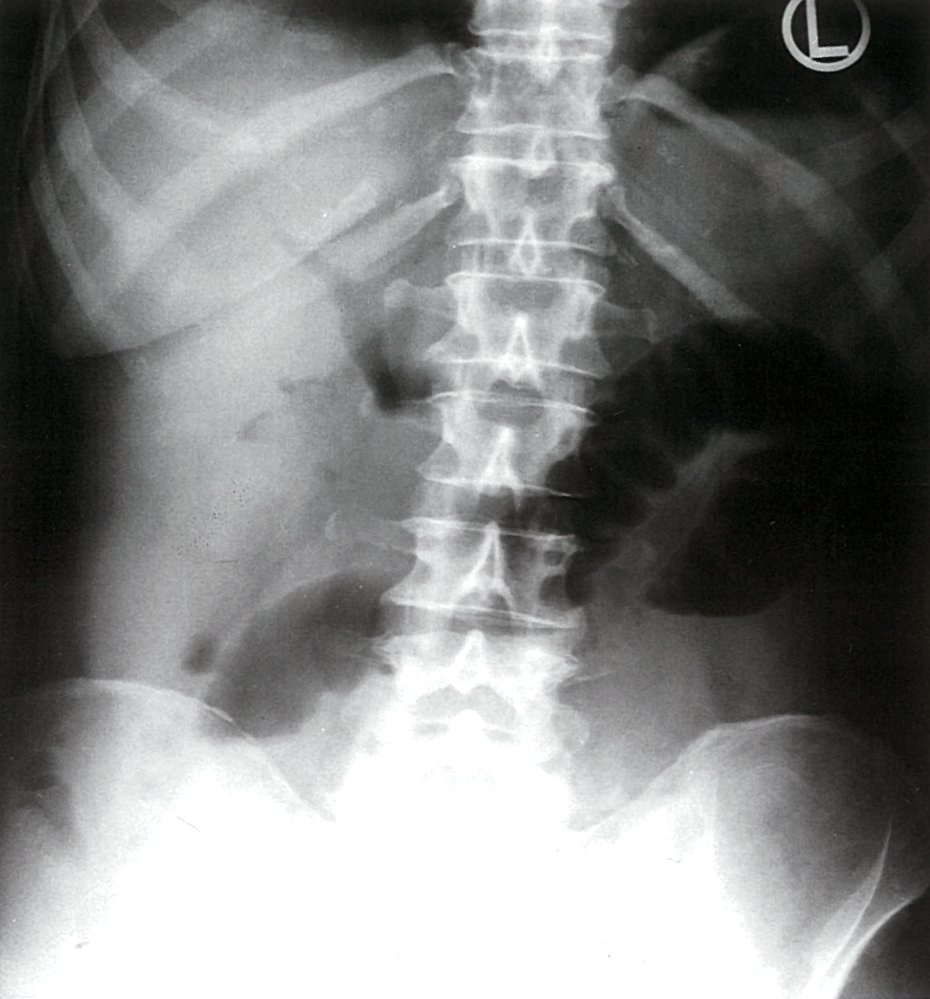
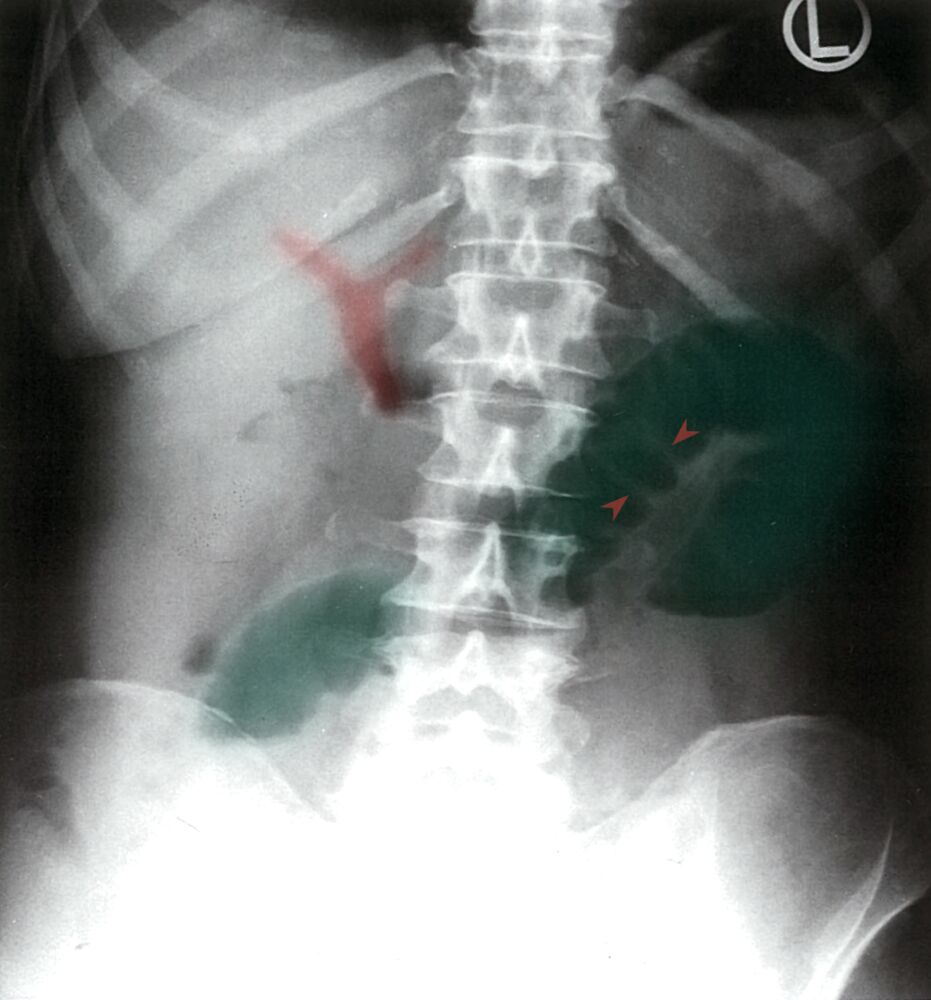
    • Diagnosis is based on the Rigler triad: imaging findings of small bowel obstruction, Gallstones (most commonly in iliac fossa), and pneumobilia.
      • Air can move up toward the biliary ducts through a cholecystoenteric fistula.