- Definition: a common degenerative disorder of GI vessels (mostly venous) that can cause GI bleeding
- Epidemiology:
- Age >60 years.
- Aortic stenosis (AS): Strongly associated via Heyde syndrome (acquired type 2A von Willebrand disease [vWD] due to shear-induced destruction of vWF multimers by the stenotic valve). c
- End-stage renal disease (ESRD): Bleeding diathesis exacerbated by uremic platelet dysfunction.
- Location: Most common in the cecum and ascending colon (due to highest wall tension in the colon).
- Clinical features
- Painless hematochezia or melena (typically episodic and self-limiting). c
- Iron deficiency anemia (IDA) symptoms (fatigue, dyspnea on exertion, conjunctival pallor).
- Often asymptomatic and detected incidentally on screening colonoscopy.
- Diagnostics
- Laboratory studies
- Positive fecal occult blood test
- CBC and iron studies to evaluate for anemia
- Endoscopy: the preferred method for establishing diagnosis
- Findings
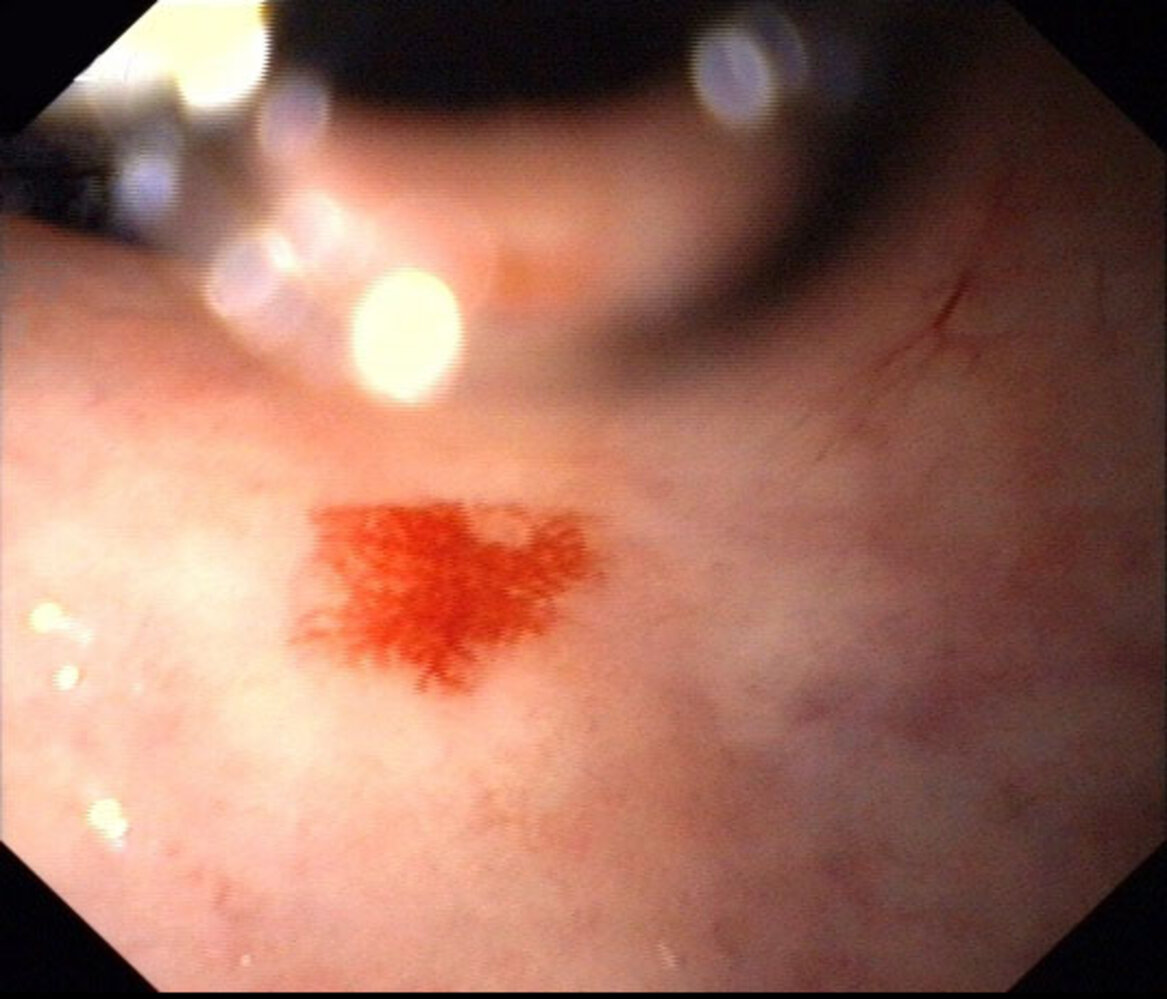
- Lesions are usually multiple tortuous dilated vessels, most commonly located in the right-sided colon
- Angiography
- Gold standard
- Indication: recurrent bleeding with inconclusive endoscopy