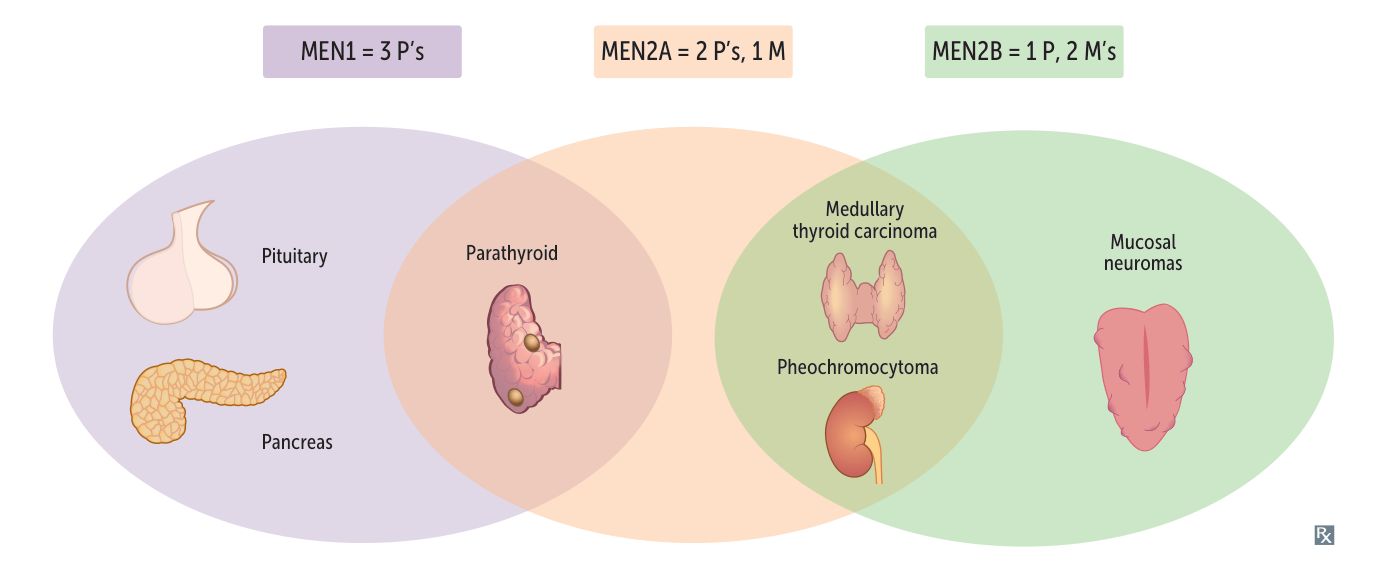
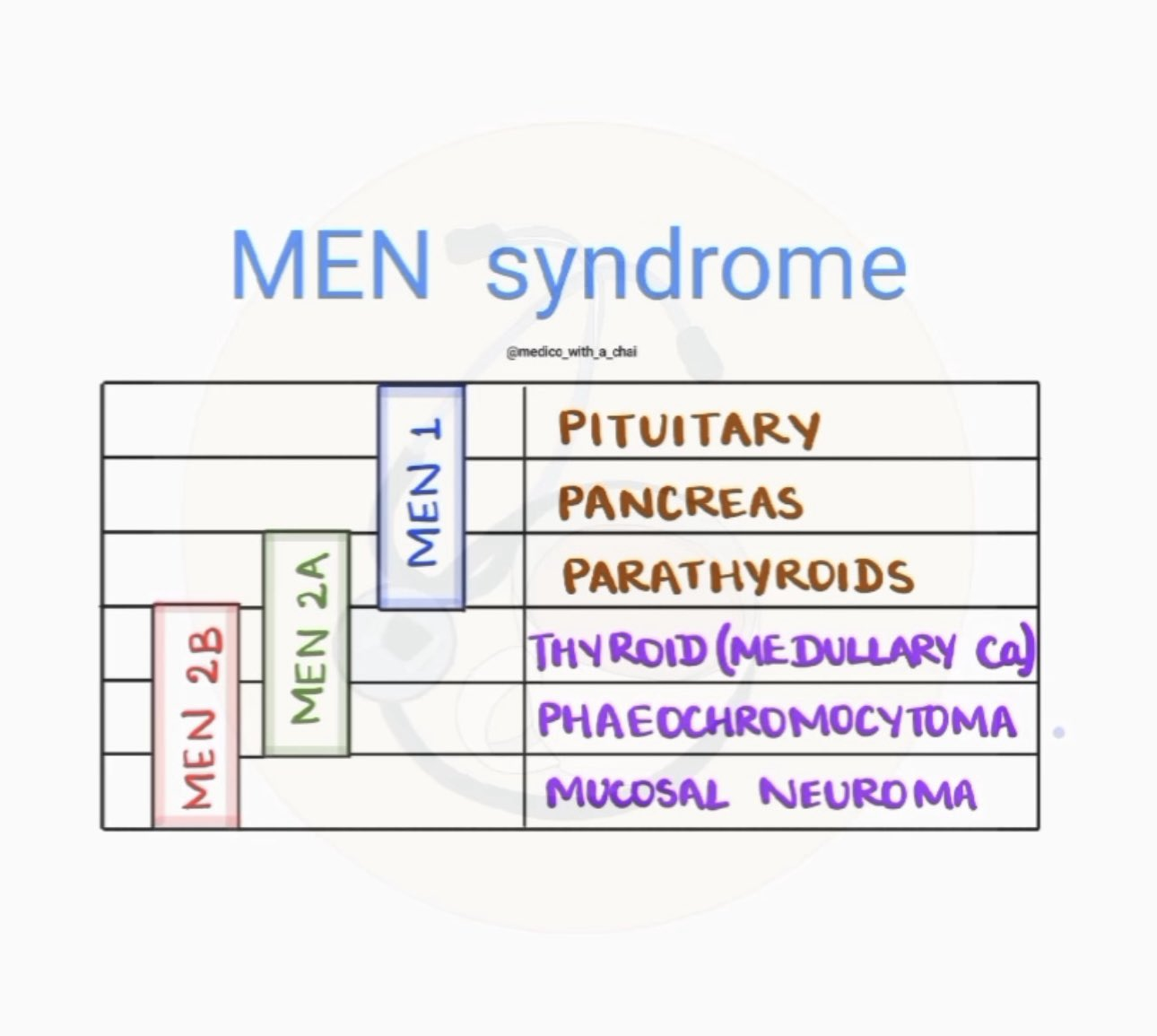
- MEN1: the number “1” in MEN1 should remind you of primary or prime number. MEN1 involves things that start with the letter P:
- Pituitary adenoma
- Parathyroid hyperplasia
- Pancreatic islet cell tumors (gastrinoma, insulinoma, glucagonoma)
- MEN2A: happens to involve the letter C (This is MEN2A, so there are two C’s in each item!): c
- Calcitonin (medullary carcinoma of the thyroid with elevated calcitonin level)
- Calcium (parathyroid hyperplasia, which causes elevated calcium levels)
- Catecholamines which are made in the chromocytes (as in pheochromocytoma)
- Men 2B: B is for big (marfanoid habitus) and for belly problems (mucosal neuromas)
- MEN 1
- Mutation of the MEN1 gene (located on chromosome 11) → altered expression of menin protein
- MEN 2
- Altered expression of the RET proto-oncogene → elevated tyrosine kinase activity
- MEN 2B
- See Hereditary cancer syndromes
Clinical Features
- MEN 1 (The 3 Ps):
- Pituitary adenomas: Most commonly prolactinoma (amenorrhea, galactorrhea, bitemporal hemianopsia) or GH-secreting adenoma.
- Parathyroid hyperplasia: Primary hyperparathyroidism (PHPT) presenting with kidney stones, bone pain, abdominal groans, psychiatric overtones.
- Pancreatic islet cell tumors: Gastrinoma (Zollinger-Ellison syndrome w/ refractory peptic ulcers), insulinoma (hypoglycemia), glucagonoma, or VIPoma. c
- MEN 2A (The 1 P, 2 Cs):
- Parathyroid hyperplasia: PHPT (recurrent nephrolithiasis, hypercalcemia).
- Medullary thyroid carcinoma (MTC): Calcitonin-secreting tumor; presents as a thyroid nodule/goiter.
- Pheochromocytoma: Epinephrine/norepinephrine-secreting adrenal tumor; presents with paroxysmal HTN, headache, diaphoresis, palpitations.
- MEN 2B (The 1 P, 3 Cs / Mucosal/Marfanoid):
- Medullary thyroid carcinoma (MTC): Highly aggressive; develops in early childhood.
- Pheochromocytoma: Often bilateral.
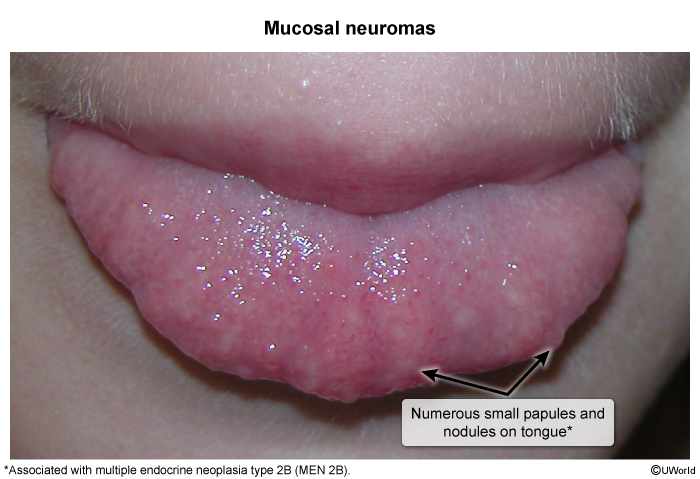
- Mucosal neuromas: Benign tumors on the tongue, lips, and eyelids.
- Marfanoid habitus: High-arched palate, arachnodactyly, pectus excavatum (but no lens subluxation or aortic dissection).
- Intestinal ganglioneuromatosis: Leads to megacolon, constipation, or chronic diarrhea.