Epidemiology


Etiology


Pathophysiology


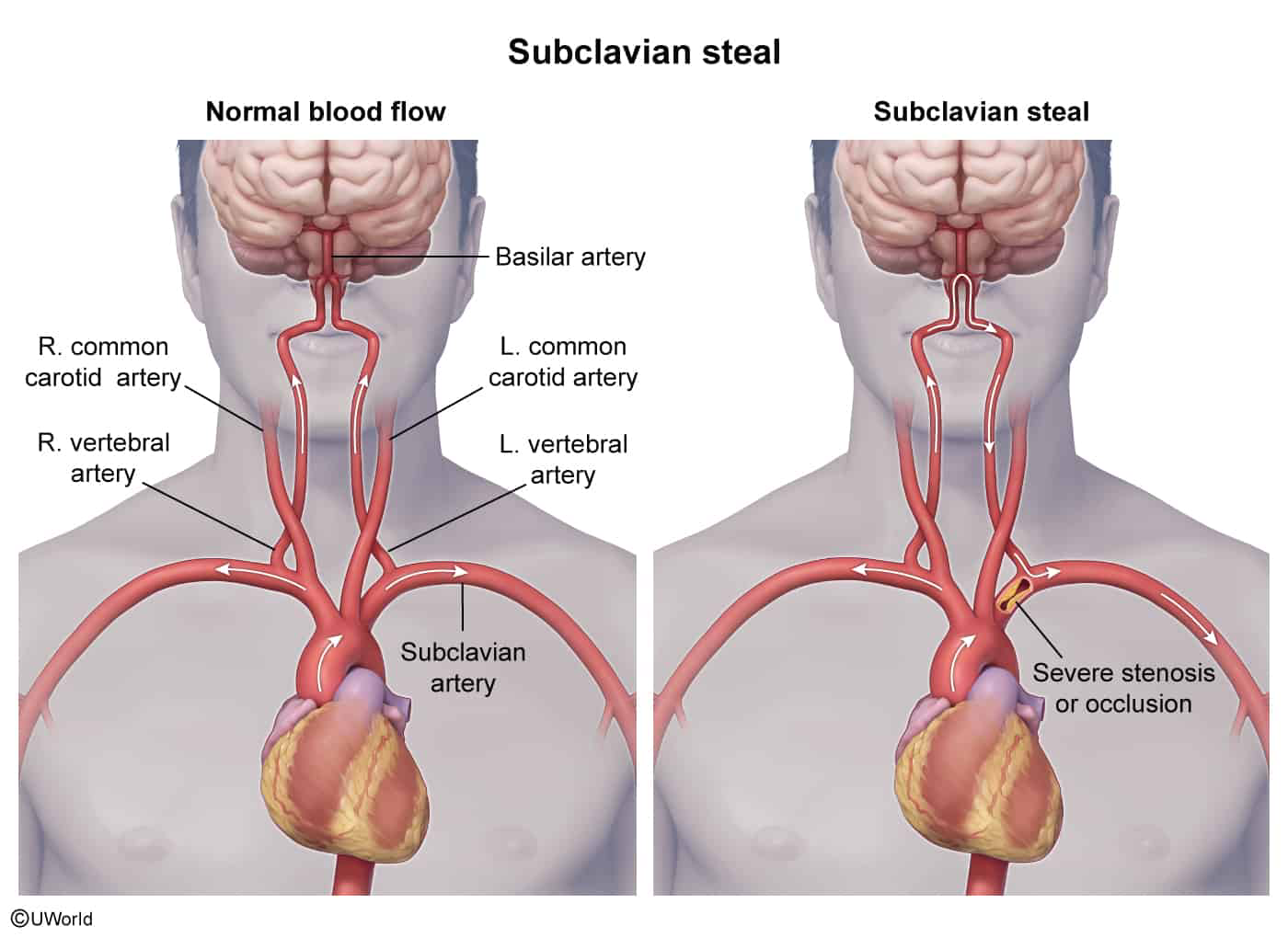
  • Stenosis or occlusion of the proximal subclavian artery, usually due to atherosclerosis.
    • Stenosis is located proximal to the origin of the vertebral artery.
    • During arm exercise, the increased O2 demand leads to vasodilation in the arm.
    • Blood flows from the contralateral vertebral artery -> basilar artery -> retrograde down the ipsilateral vertebral artery -> to the subclavian artery distal to the stenosis.
    • This “steals” blood from the posterior cerebral circulation (vertebrobasilar system).

Clinical features


  • History:
    • Vertebrobasilar Insufficiency (VBI) triggered by vigorous upper-extremity exertion: c
      • Dizziness, vertigo, syncope, ataxia, diplopia, visual disturbances, dysarthria.
    • Upper Extremity Ischemic Symptoms:
      • Arm claudication, paresthesias, pain, coldness, or early fatigue in affected arm during exertion.
    • Coronary-Subclavian Steal (in pts post-CABG w/ LIMA): Angina pectoris elicited by ipsilateral arm exercise.
  • Physical Exam:
    • Blood Pressure Discrepancy: > 15–20 mm Hg difference in SBP between arms (lower on affected side).
    • Decreased/Delayed radial pulse on the affected side.
    • Supraclavicular systolic bruit over the affected subclavian artery.

Diagnostics


  • Duplex ultrasonography: Best initial test. Can demonstrate stenosis and reversal of flow in the vertebral artery.
  • CT or MR Angiography (CTA/MRA): Confirmatory tests used to visualize the anatomy and plan for intervention.

Differential Diagnostics

  • Posterior Circulation TIA / Stroke:
    • Differentiated by lack of association with arm exercise, no upper extremity BP discrepancy, and absence of retrograde vertebral flow.
  • Thoracic Outlet Syndrome (TOS):
    • Extrinsic compression of neurovascular bundle (cervical rib/scalene muscles).
    • Differentiated by symptom reproduction with arm elevation/abduction (e.g., positive Adson test / Wright test) and lack of VBI symptoms.
  • Carotid Artery Stenosis:
    • Manifests with anterior circulation symptoms (amaurosis fugax, unilateral motor/sensory deficits, aphasia); no arm claudication or BP discrepancy.
  • Aortic Dissection (Stanford Type A or B involving arch):
    • Acute onset of tearing chest/back pain, hemodynamic instability; differentiated by rapid onset and emergent chest CTA findings.

Treatment