Hypercoagulability: increased platelet adhesion, thrombophilia (e.g., factor V Leiden mutation), use of oral contraceptives, pregnancy, malignancyc
Endothelial damage: Inflammatory or traumatic vessel injuries can lead to activation of clotting factors through contact with exposed subendothelial collagen.
Venous stasis: varicosis, external pressure on the extremity, immobilization (e.g., hospitalization, bed rest, long flights or bus rides), local application of heat
Clinical features
Common Anatomic Sites:
Lower Extremity (Most Common, ~90%):
Proximal DVT: Popliteal, femoral, and iliac veins (highest risk of Pulmonary Embolism; requires immediate anticoagulation). c
Distal (Calf) DVT: Posterior tibial, peroneal, and anterior tibial veins (lower PE risk, higher rate of spontaneous resolution; managed with anticoagulation or serial U/S monitoring).
Upper Extremity (~10%):
Axillary and subclavian veins.
High-yield etiologies: Indwelling central venous catheters (CVCs), PICC lines, transvenous pacemakers, or Paget-Schroetter syndrome (thoracic outlet compression / effort thrombosis in young athletes).
Subtypes and variants
Upper extremity deep vein thrombosis
Etiology & Risk Factors:
Secondary (>80%): Central venous catheters (CVCs), PICC lines, pacemaker/ICD leads, active malignancy.
Primary (<20%): Paget-Schroetter syndrome (effort thrombosis from repetitive overhead arm exertion in young athletes) or Thoracic Outlet Syndrome (TOS).
Clinical Features:
Acute unilateral arm swelling, heaviness, and dull ache.
Unprovoked DVT / Recurrent DVT: ≥3–6 months, followed by indefinite AC if bleeding risk is low.
Active Malignancy: Continue AC indefinitely or until cancer resolves/chemotherapy concludes.
Second-line / Specific Interventions:
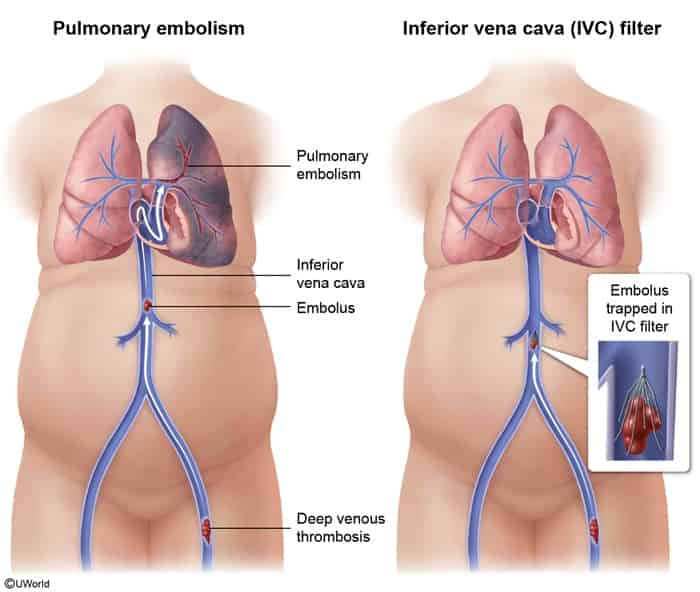
Inferior Vena Cava (IVC) Filter:
Indications: Absolute contraindication to AC (e.g., active major bleeding, recent hemorrhagic stroke) OR recurrent PE/DVT despite therapeutic AC. c
Must retrieve filter once AC contraindication resolves. Although IVC filters protect against PE (relative risk ~0.5), they increase the long-term risk of recurrent DVT (relative risk ~2).