- Mechanism of Action
- Indirect Sympathomimetic: Inhibits presynaptic reuptake of norepinephrine, dopamine, and serotonin → accumulation in synaptic cleft.
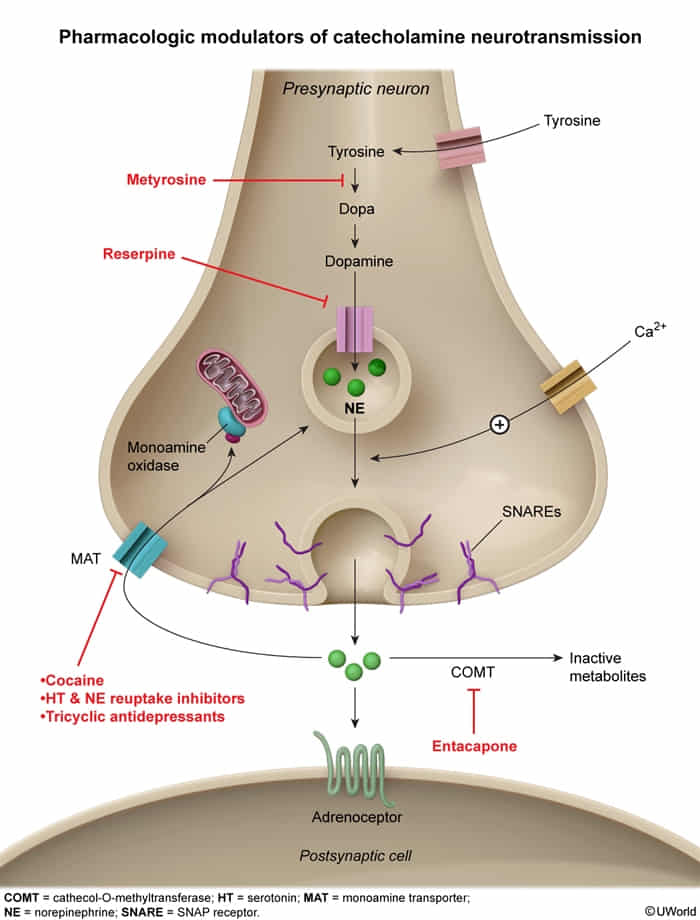
- Local Anesthetic: Blockade of voltage-gated Na+ channels (prevents nerve conduction).
- Vasoconstriction: Potent vasoconstrictor via alpha-1 stimulation.
- Clinical Features (Intoxication)
- Psychiatric: Euphoria, psychomotor agitation, paranoia, hallucinations (specifically tactile: “formication” or “cocaine crawlies”).
- Sympathetic Overdrive: ↑ HR, ↑ BP, Hyperthermia, Diaphoresis.
- Physical Exam: Mydriasis (pupillary dilation), chest pain.
- Chronic Use: Nasal septum perforation (due to chronic ischemic necrosis from vasoconstriction).
- Complications
- Cardiovascular: Coronary vasospasm (can cause MI even in young patients with clean coronaries), Prinzmetal angina, Aortic dissection, Arrhythmias. c
- Neurologic: Seizures, Intracranial hemorrhage (stroke).
- Pregnancy: ↑ Risk of Placental Abruption, IUGR, preterm delivery.
- Withdrawal
- “The Crash”: Severe depression, suicidality, fatigue/hypersomnia, increased appetite, vivid unpleasant dreams.
- Note: Withdrawal is uncomfortable but generally not life-threatening (unlike alcohol or benzodiazepines).
- Treatment
- Agitation/Seizures/Chest Pain: Benzodiazepines (First-line).
- Hypertension/Ischemia: Nitroglycerin, Calcium Channel Blockers, or Phentolamine (alpha-antagonist).
- Contraindication (High Yield): Do NOT give Beta-blockers in acute toxicity.
- Reasoning: Blocking beta-2 (vasodilatory) receptors leaves alpha-1 (vasoconstrictive) receptors unopposed → “Unopposed alpha stimulation” → severe hypertension and worsening coronary vasoconstriction.