- Contents
- Males: Spermatic cord.
- Females: Round ligament of the uterus.
- Both:
- Ilioinguinal nerve (L1): Enters partway through the canal and exits via the superficial ring. Does NOT pass through the deep ring. Provides sensation to the upper medial thigh, root of the penis/scrotum, and mons pubis/labia majora. Most commonly injured nerve in hernia repair.
- Genital branch of the genitofemoral nerve (L1, L2): Supplies the cremaster muscle and scrotal skin (males) or labia majora (females).
Etiology
Pathophysiology
Indirect Inguinal Hernia
- Pathophysiology:
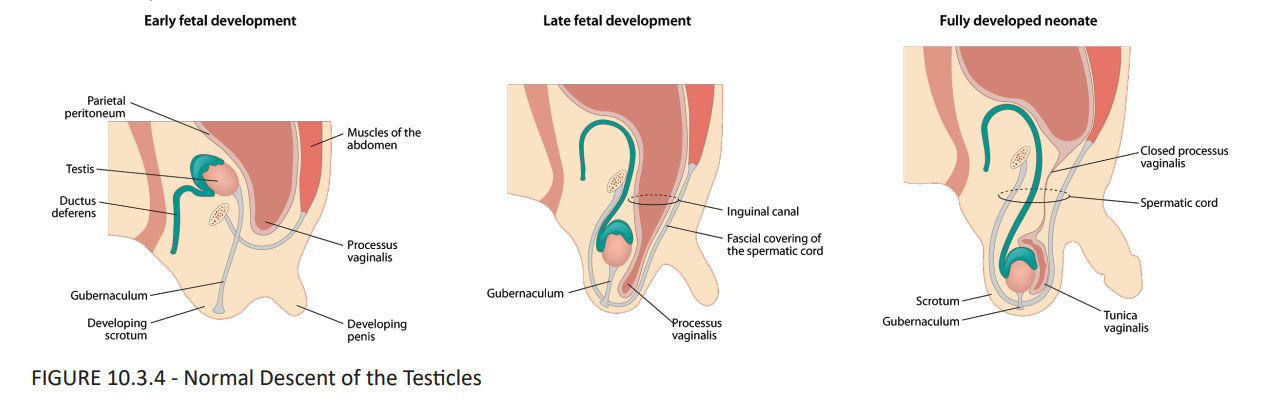
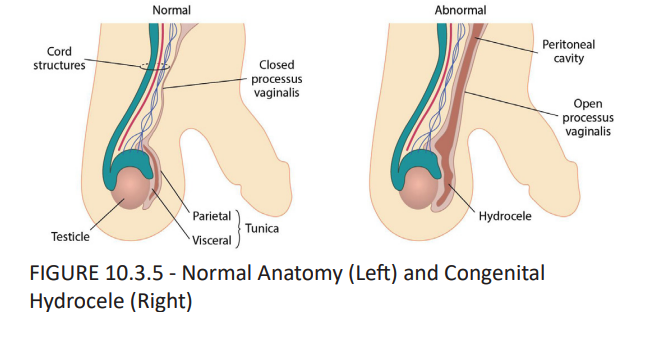
- Results from a patent processus vaginalis, which is a congenital failure of the peritoneal outpouching to close.
- The herniating bowel follows the path of the spermatic cord through the inguinal canal.
- Course:
- Enters the deep inguinal ring, traverses the entire inguinal canal, and exits through the superficial inguinal ring. It can descend into the scrotum.
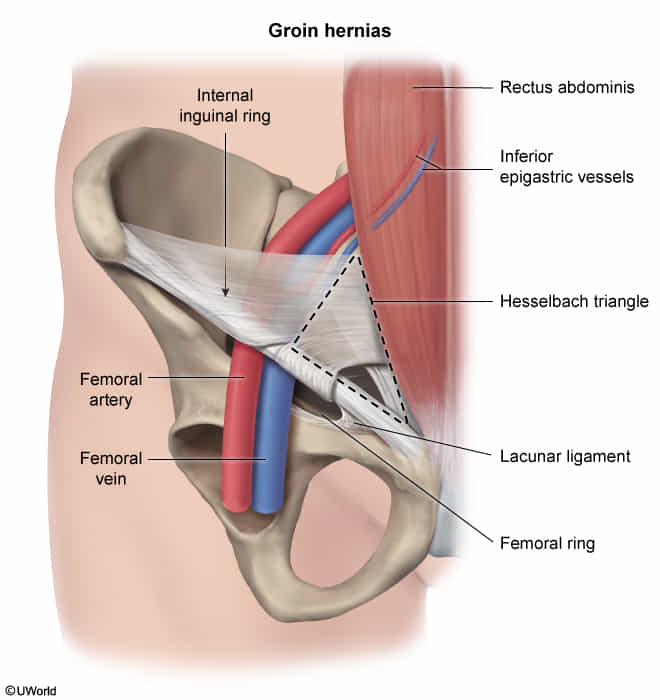
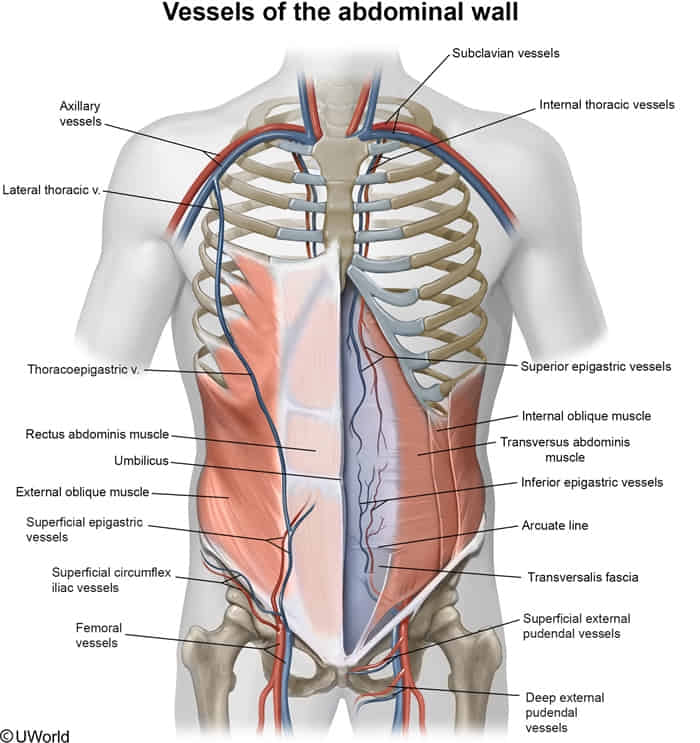
- Always located LATERAL to the inferior epigastric vessels.
- Epidemiology:
- The most common type of inguinal hernia (about 80%).
- More common in children and young males.
- Associations:
- Covered by all three layers of spermatic fascia (internal spermatic, cremasteric, and external spermatic).
Direct Inguinal Hernia
- Pathophysiology:
- Protrudes through a weakness in the posterior wall of the inguinal canal (transversalis fascia).
- This area of weakness is known as Hesselbach’s triangle.
- Typically an acquired condition due to mechanical stress or weakness of the abdominal wall, common in older men.
- Hesselbach’s Triangle Borders:
- Medial: Lateral border of the rectus abdominis muscle.
- Superolateral: Inferior epigastric vessels.
- Inferior: Inguinal ligament.
- Course:
- Pushes directly through the floor of the canal and exits through the superficial inguinal ring. It does not traverse the deep ring.
- Always located MEDIAL to the inferior epigastric vessels.
- Rarely enters the scrotum.
Clinical features
Diagnostics
Treatment
Complications
Postoperative complications
- Inguinodynia; paresthesia or anesthesia over the surgical site
- Can be secondary to nerve injury during the surgical procedure (i.e., transection of the ilioinguinal nerve or genitofemoral nerve that traverse the inguinal region) or due to nerve entrapment within the mesh.
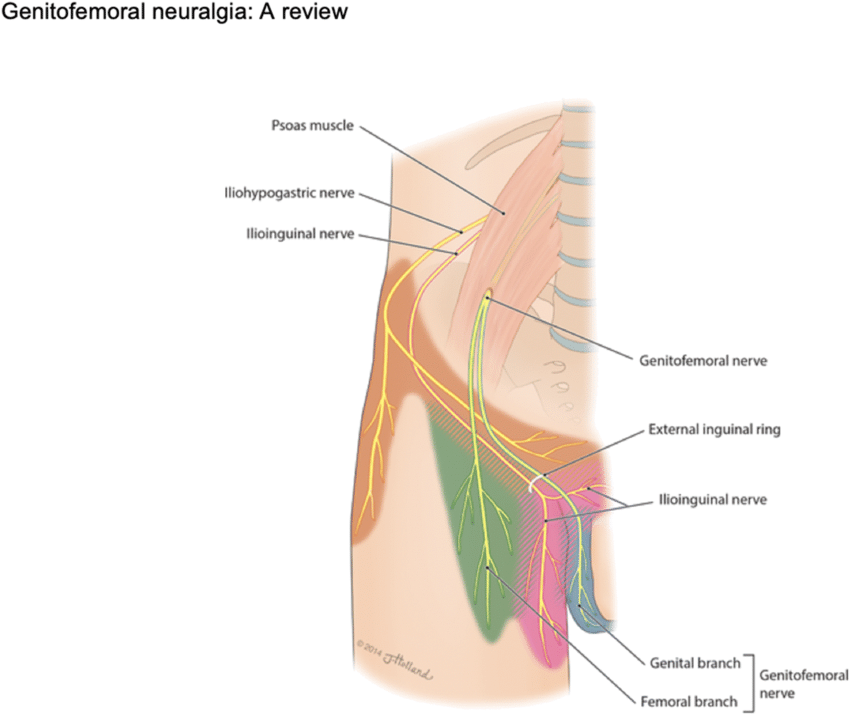
- Genitofemoral nerve
- Can be secondary to nerve injury during the surgical procedure (i.e., transection of the ilioinguinal nerve or genitofemoral nerve that traverse the inguinal region) or due to nerve entrapment within the mesh.