- Etiology/Pathophysiology
- Infarction of the anterior spinal artery (ASA).
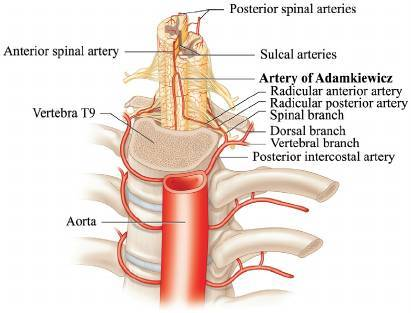
- Supplies the anterior 2/3 of the spinal cord (includes Anterior Horns, Corticospinal tracts, Spinothalamic tracts).
- Common Causes:
- Aortic surgeries (e.g., AAA repair) affecting the Artery of Adamkiewicz (major supplier to ASA, typically T8-L1). t
- Atherosclerosis/Thrombosis.
- Severe hypotension/Shock (“watershed” areas).
- Disc herniation or Trauma (hyperflexion injuries).
- Clinical Features
- Motor Deficits (Corticospinal Tract & Anterior Horn):
- LMN signs at the level of the lesion (flaccid paralysis).
- UMN signs below the level of the lesion (spastic paralysis, hyperreflexia, +Babinski).
- Sensory Deficits (Spinothalamic Tract):
- Bilateral loss of pain and temperature sensation below the lesion.
- Autonomic Dysfunction:
- Urinary retention or incontinence.
- Bowel dysfunction.
- Sparing (Key Differentiator):
- Proprioception and Vibration are PRESERVED (Dorsal Columns are supplied by posterior spinal arteries). t
- Diagnostics
- MRI of Spine: Test of choice; shows signal abnormality (T2 hyperintensity) in the anterior cord.
- Clinical exam: Dissociated sensory loss (loss of pain/temp with intact vibration/proprioception).
- Management
- Supportive Care: Maintain perfusion pressure (avoid hypotension).
- Treat underlying cause (e.g., vascular surgery consult if aortic dissection).
- Rehabilitation (PT/OT).