Epidemiology
Etiology
- Primary:
- Hematogenous or lymphatic spread from a distant site.
- Most common organism: Staphylococcus aureus.
- Risk factors: IV drug use (IVDU), immunosuppression (HIV, diabetes), renal failure.
- Secondary:
- Contiguous spread from an adjacent infectious process. More common than primary.
- Sources:
- GI: Crohn’s disease, diverticulitis, appendicitis, colorectal cancer.
- GU: UTI, renal abscess.
- Vertebral: Vertebral osteomyelitis (Potts disease - M. tuberculosis).
- Organisms: Often polymicrobial, including E. coli, Bacteroides, Streptococcus spp.
Pathophysiology
Clinical features
- Classic Triad: Fever, back/flank pain, and limp.
- Pain may radiate to the groin or hip.
- Pt often lies supine with the hip flexed and externally rotated to relieve pain.
- “Psoas sign”: Pain on passive extension of the hip (stretches the inflamed muscle).
Diagnostics
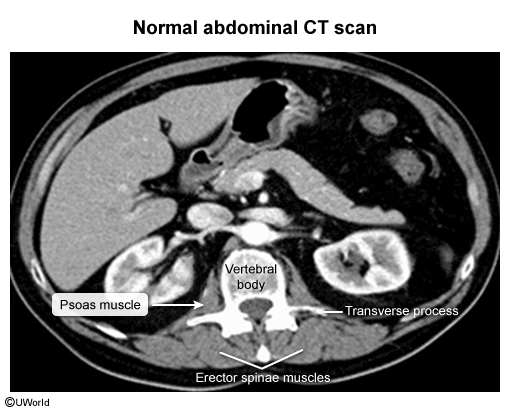
CT abdomen and pelvis with IV contrast
Treatment