Epidemiology
Etiology
- Transmission
- Vector: phlebotomine sand fly
Pathophysiology
Clinical features
- Visceral Leishmaniasis (Kala-azar)
- Caused by L. donovani.
- Spiking fevers, weight loss, malaise.
- Massive hepatosplenomegaly (spleen > liver).
- Pancytopenia (anemia, leukopenia, thrombocytopenia) due to bone marrow infiltration.
- Hyperpigmentation of skin (hence “Black fever” or Kala-azar).
- Cutaneous Leishmaniasis
- Skin ulcers at bite sites that increase in size and develop central ulceration (painless or painful).
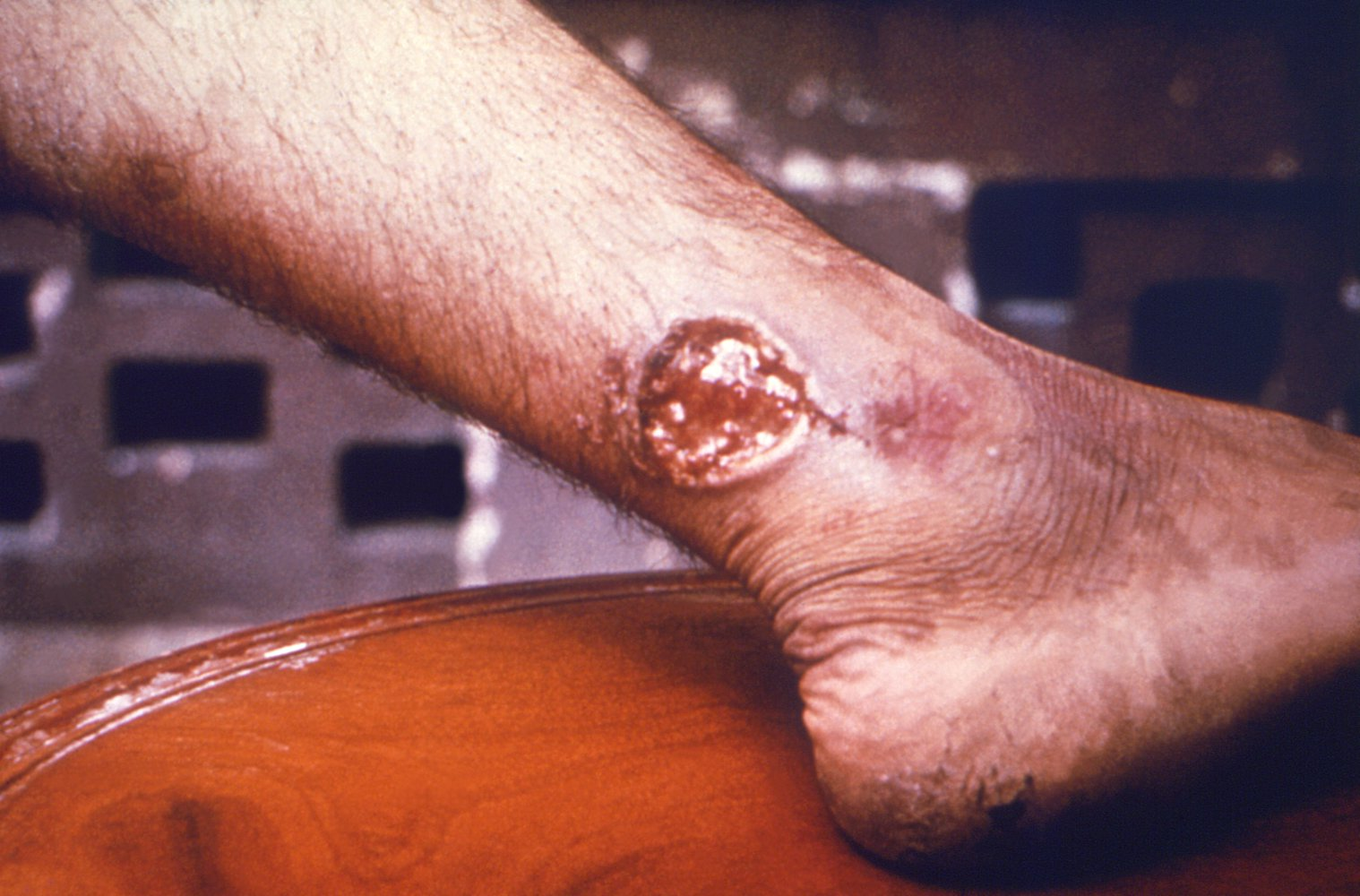
- “Pizza-like” lesion with raised, indurated borders.
- Mucocutaneous Leishmaniasis
- Caused by L. braziliensis.
- Destructive lesions of mucous membranes (nose, mouth, throat).
- Can lead to severe disfigurement (e.g., erosion of nasal septum).
Diagnostics
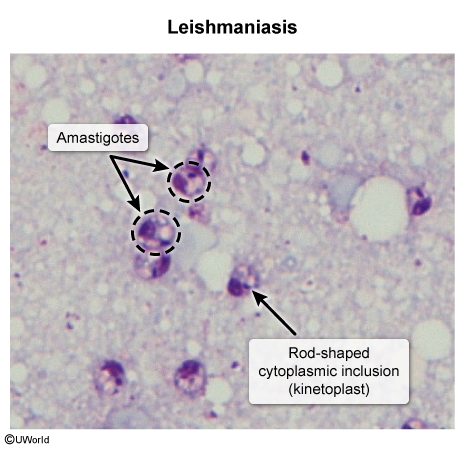
- Microscopy: macrophages that contain amastigotes
- Amastigote: round or oval with a peripherally located nucleus
Treatment