- Pathophysiology
- Warfarin inhibits epoxide reductase, decreasing activation of Vitamin K-dependent factors (II, VII, IX, X) and anticoagulant proteins (C and S).
- Protein C has a significantly shorter half-life (~14 hrs) compared to clotting factors (Factor II ~60 hrs, Factor X ~40 hrs).
- Early in therapy, Protein C levels drop rapidly while procoagulant factors remain active.
- Result: Transient hypercoagulable state leading to microvascular thrombosis in subcutaneous fat.
- Risk Factors & Associations
- Protein C Deficiency (Autosomal Dominant): Classic USMLE association. Patients with undiagnosed deficiency are at extremely high risk.
- Large “loading doses” of warfarin.
- Failure to bridge with Heparin during initiation.
- Clinical Features
- Onset: Typically days 3–10 after starting warfarin.
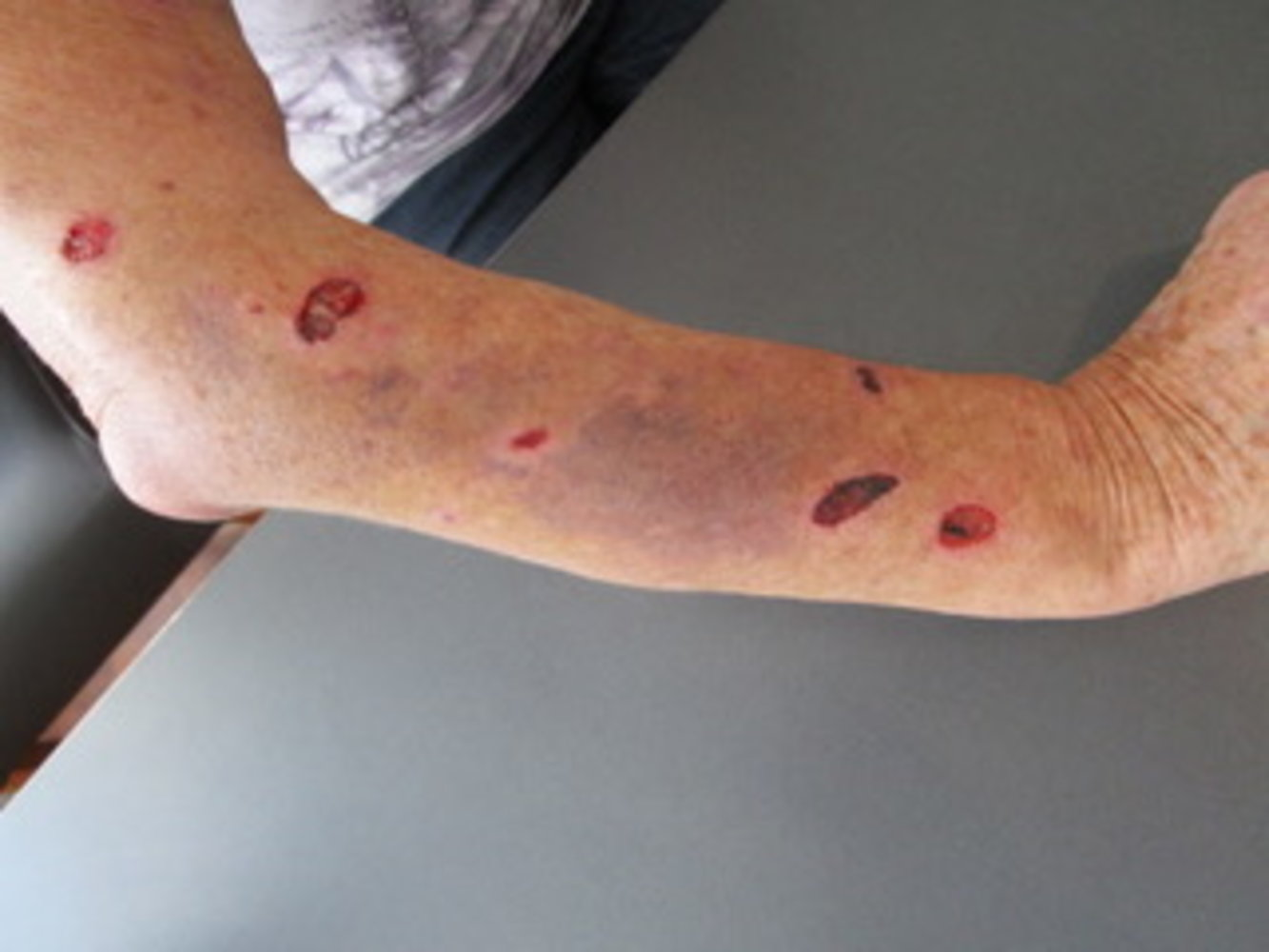
- Progression: Paresthesias/Pain → Erythema → Petechiae → Hemorrhagic Bullae → Frank tissue necrosis/eschar.
- Location: Areas with high adipose tissue content (e.g., Breasts, abdomen, buttocks, thighs).
- Female predilection (due to higher body fat %).
- Management
- Stop Warfarin immediately.
- Restore Protein C levels: Fresh Frozen Plasma (FFP) or Protein C concentrate.
- Reverse Warfarin: Vitamin K.
- Anticoagulation: Switch to Heparin (Unfractionated or LMWH) for therapeutic anticoagulation.
- Surgical: Debridement or skin grafting for necrotic areas.
- Prevention
- Heparin Bridge: Always start Heparin (immediate effect) along with Warfarin until INR is therapeutic (2–3) for at least 24 hours.
- “Start low and go slow” with warfarin dosing (e.g., 5mg) rather than high loading doses.