Epidemiology
Etiology
severe malnutrition (e.g., due to alcoholism, illicit drug use, and/or psychiatric illness)
Pathophysiology
Vitamin C functions
- Hydrophilic antioxidant
- Conversion of dopamine to norepinephrine: coenzyme in dopamine β-hydroxylase
- collagen synthesis: coenzyme in hydroxylation reaction of proline and lysine
Drawing 2026-01-15 21.36.00.excalidraw
⚠ Switch to EXCALIDRAW VIEW in the MORE OPTIONS menu of this document. ⚠ You can decompress Drawing data with the command palette: ‘Decompress current Excalidraw file’. For more info check in plugin settings under ‘Saving’
Excalidraw Data
Text Elements
Vitamin C Deficiency
Osteogenesis Imperfecta
Ehlers-Danlos
Menkes Disease
Embedded Files
58c7f467e25b3598403f962e309bd81ecd1fe2c6: Pasted Image 20260115213631_102.png
Link to original - Facilitates iron absorption (keeps iron in Fe2+ reduced state)
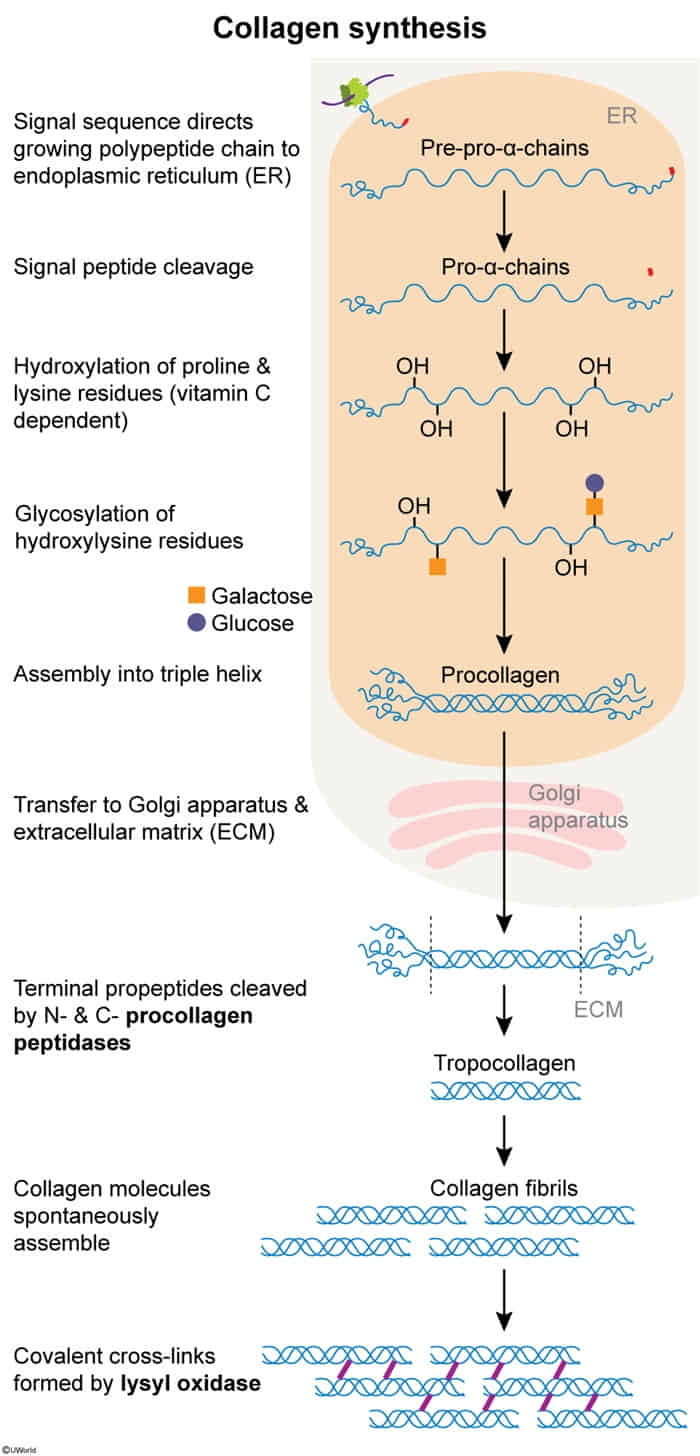
Clinical features
- Scurvy: clinical manifestation of vitamin C deficiency, which leads to impaired collagen synthesis and easily damaged connective tissue
- Follicular hyperkeratosis, perifollicular hemorrhage, coiled “corkscrew” hair
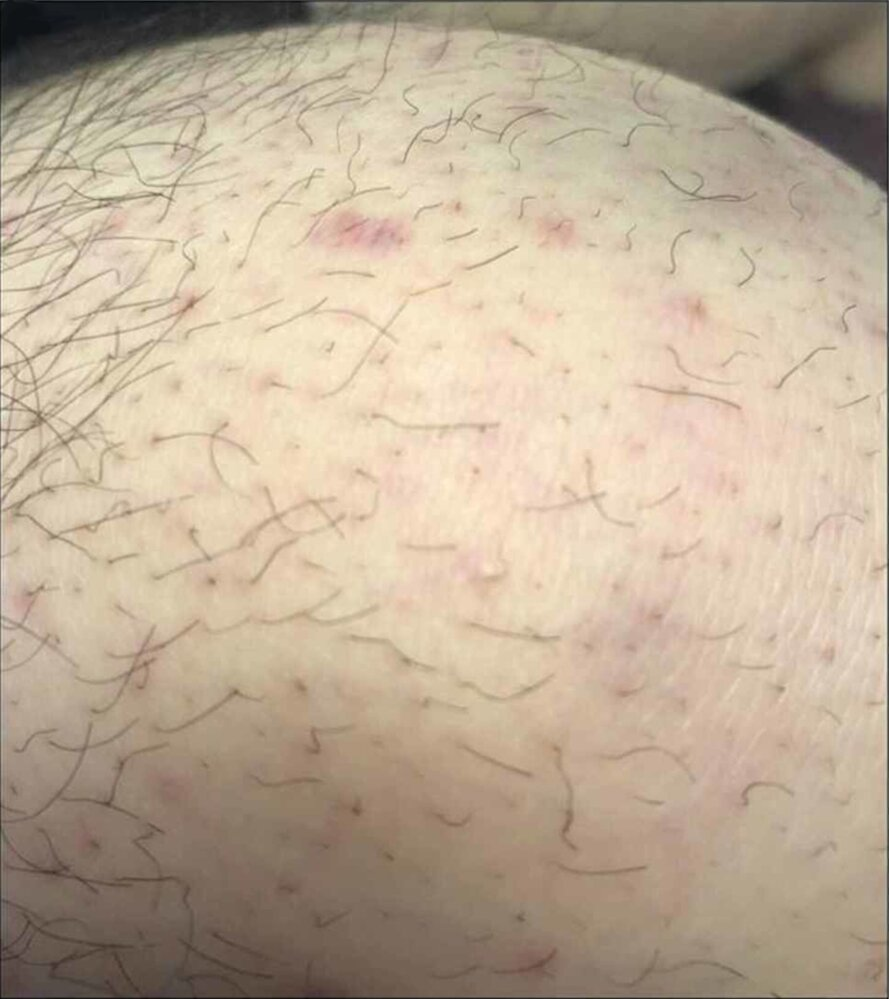
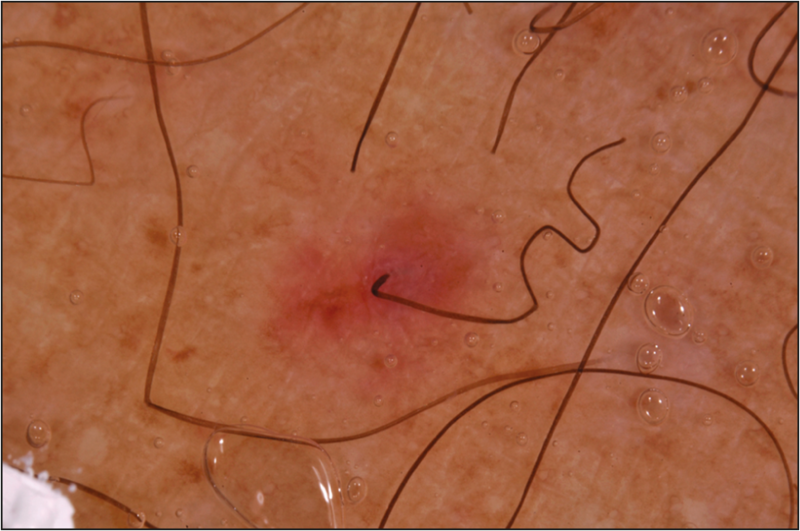
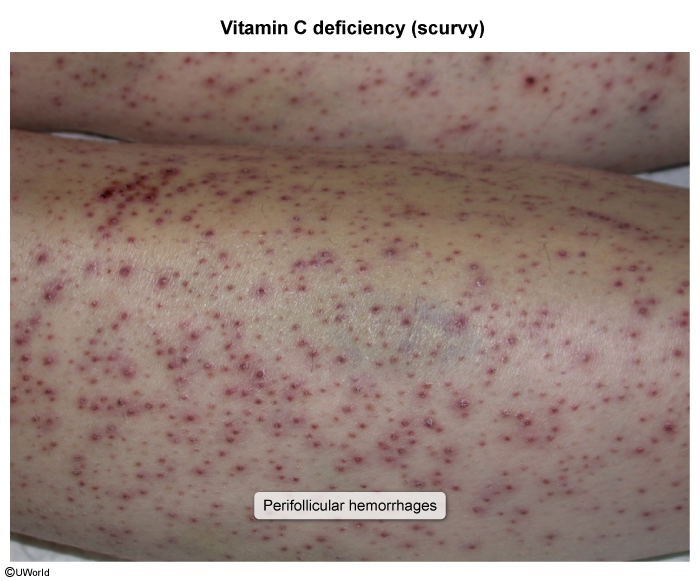
- Intramuscular or subperiosteal hemorrhages, especially in the lower extremities due to increased hydrostatic pressure. This results in pain and difficulty with ambulation, which may be the presenting symptoms in children.
- Gingivitis, swollen gums
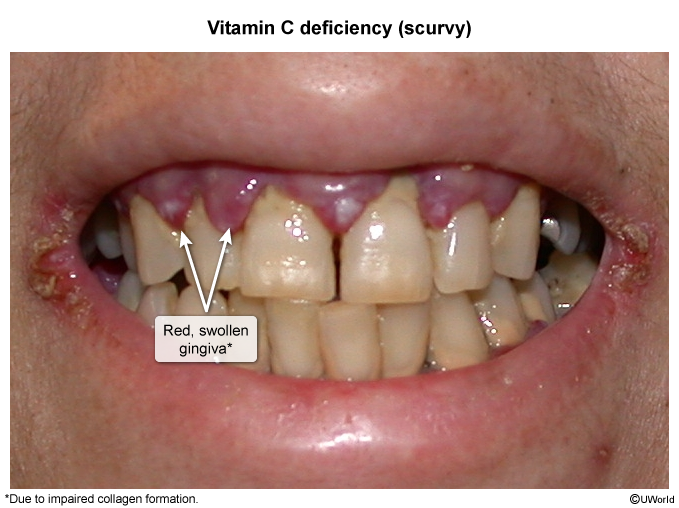
- Mucosal bleeding, easy bruising, petechiae
- Impaired wound healing
- Arthralgia, hemarthrosis
- Signs of anemia (fatigue, paleness)
- Normocytic anemia: decreased iron absorption in the small intestine
- Macrocytic anemia: decreased conversion of folate into its active metabolite
- Follicular hyperkeratosis, perifollicular hemorrhage, coiled “corkscrew” hair
- Poor immune response
Tip
Suspect scurvy when the patient is malnourished, with symptoms of corkscrew hair, bleeding, anemia.
Diagnostics
Treatment
Vitamin C toxicity
- Nausea, vomiting
- Diarrhea, bloating
- Fatigue
- ↑ Risk of iron toxicity in transfusion patients and hereditary hemochromatosis due to increased absorption of dietary iron
- Nephrolithiasis due to ↑ calcium oxalate formation
- excess oxalate from vitamin C metabolism